How to Navigate Paris Like a Local
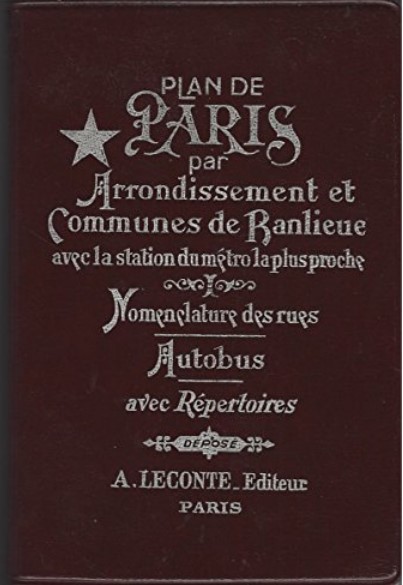
I began traveling to Paris long before smartphones, when getting lost wasn’t a setback but part of the experience. There were no Google Maps, no blue dots tracking your steps, no instant recalculations—just intuition, memory, and a small, often-worn Plan de Paris par arrondissement tucked into a bag or coat pocket.
Mine little book was burgundy with a vinyl cover. It didn’t unfold into a single seamless map. Instead, it revealed the city in fragments—small 4-by-5¾-inch panels, one arrondissement at a time. You learned to live with partial information. And somehow, those partial views made Paris feel more accessible.
For someone from Chicago—a city laid out on a precise grid where direction and numbering are fixed and predictable—Paris was disorienting at first. Like many visitors, I navigated by landmarks and oriented myself by the Eiffel Tower, Notre-Dame, the Arc de Triomphe, and the Opéra. If I drifted too far, I opened my little burgundy book to the corresponding arrondissement and reassembled the city in my head.
At some point, I stopped thinking of Paris as a collection of places to locate and began seeing it as something to read, something to understand, and something to know. When that happened, I my experience of Paris changed dramatically—I stopped reading a map and started reading the city.
Instead of asking only “Where am I?”, I began asking “How does this part of the city work?”
Here’s what I learned…
The Seine Is Your Anchor
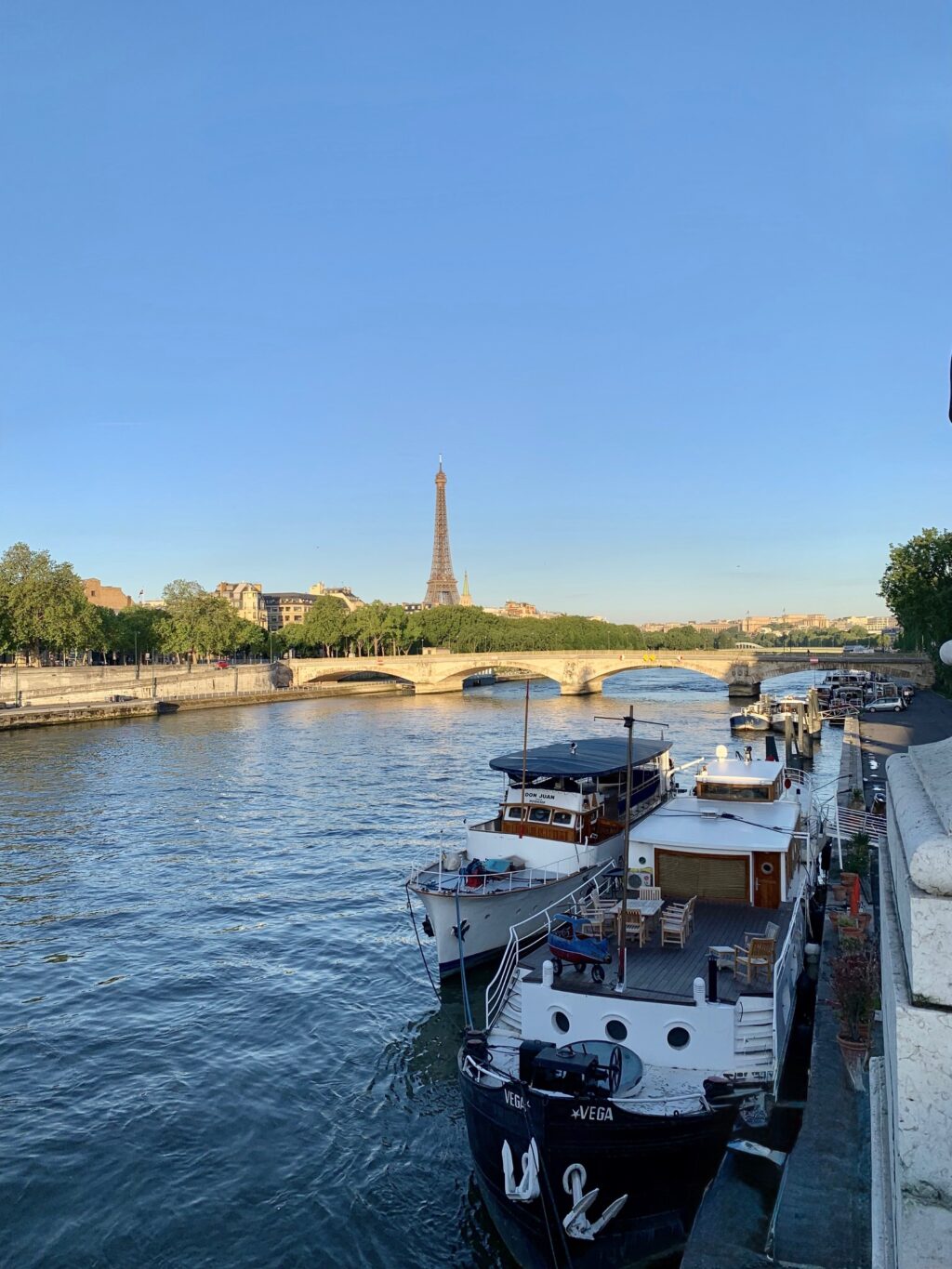
Paris follows a remarkably rational numbering system, even though you may not see it at first. When you begin to use the river—rather than monuments—as your anchor, the logic starts to emerge.
In many parts of Paris, street numbers begin closest point to the Seine and increase as you move farther away from the river. For streets that run north to south, this pattern is especially noticeable: the nearer you are to the river, the lower the numbers tend to be; the farther you go, the higher they climb.
And because the Seine flows through the center of the city, it also orients direction. For streets that run parallel to the Seine, the number increase according to the flow of the river, which is from southeast to northwest. This gives you a sense of whether you are moving with or against the current of Paris itself.
Once you understand this, you can often tell whether you’re walking in the right direction without opening a map. If you’re searching for No. 120 and you’re standing at No. 18, you immediately know to keep walking. If the numbers are decreasing, you’ve gone the wrong way.
It becomes less something you calculate and more something you feel—a background awareness that quietly confirms your direction as you move through the city like a local. It’s one of those subtle Parisian systems that quietly rewards observation.
Reading the Street Like a Parisian
There is another simple rule that helps everything fall into place: odd numbers sit on one side of the street and even numbers on the other.
While this is fairly typical in major cities around the world, in practice it changes how you move. If you’re looking for number 42 and you’re standing in front of number 8, you don’t just know which direction to walk—you also know which side of the street to be on. This is important because the numbering is based on the sequence of entrances along each side of the street, not on creating matched pairs across the street.
If you know these basic rules, navigation stops being abstract and becomes physical and immediate.
The History of This System
That sense of order didn’t appear all at once.
Early attempts at numbering houses in Paris began in the 18th century, but they were uneven and local, used more for taxation and administration than for navigation. Different neighborhoods developed different practices, and the city remained difficult to navigate in any unified way.
A more standardized system began to take shape in the early 19th century, during the Napoleonic era, when Paris was growing rapidly and needed clearer structure for mail delivery and governance. Later, in the 19th century, especially during the Haussmann transformation, the system became more consistent as entire districts were redesigned and new boulevards imposed a clearer geometry on the city.
What feels intuitive today is actually the result of repeated attempts to impose order on a very old, very layered city.
Here’s the Fun Part
If you speak a little French, you’ll enjoy reading the names of some of Paris’s oldest and wonderfully descriptive medieval street names, often based on the trades, activities, or less-than-glamorous realities of daily life. Here are a few that tend to amuse modern visitors:
- Rue du Chat-qui-Pêche The Street of the Cat Who Fishes, one of Paris’s shortest streets, its whimsical name sounds more like a fairy tale than an address. Legend says a mysterious cat was seen fishing in the Seine.
- Rue Tire-Boudin Sausage-Puller Street Named for sausage makers who once worked there. To modern ears, “sausage-puller” sounds comically specific and slightly absurd.
- Rue du Puits-Qui-Parle Street of the Talking Well A medieval well on the street supposedly echoed voices so clearly that people believed it could “speak.”
- Rue du Poil-au-Con Literally “Hair-on-the-Cunt Street” (a real medieval street name later deemed too vulgar and changed).
- Rue Gratte-Cul Scratch-Your-Bottom Street (named after rose hips, which were colloquially called gratte-cul because their hairs cause itching).
- Rue du Pet-au-Diable The Devil’s Fart Street.
These names reflect a medieval city that was far less concerned with refinement than modern Paris. Streets were often named after whatever people saw, smelled, sold, joked about, or complained about on a daily basis. The result was a city map that could be surprisingly colorful—and occasionally shocking—to modern sensibilities.
I don’t know about you, but I would avoid purchasing real estate—no matter what—on one of these street. I simply could not do it.
Not Perfect, But Readable
Of course, Paris doesn’t behave like a diagram.
Medieval streets bend unexpectedly. Former villages were absorbed into the city. Haussmann-era boulevards cut through older patterns. Some streets shift character entirely from one block to the next. The system has exceptions, inconsistencies, and quiet contradictions.
But that’s part of what makes it useful rather than rigid.
Paris was never rebuilt as a single idea. It accumulated itself over time. And what survives is a city that can be understood, but not solved.
A Different Way of Seeing the City
When I think back to those early trips with my little burgundy book, I realize I wasn’t just learning how to navigate Paris. I was learning how to interpret it.
The street numbers, the rhythm of the Seine, the arrangement of arrondissements—they all became part of a language. Paris revealed itself less as a single unified city than as a mosaic of small villages, each with its own rhythm, edges, and internal logic. Those fragments I once studied in 4-by-5¾-inch panels began to feel like living parts of something continuous.
Even now, with digital maps always within reach, I still notice street numbers as I walk. They offer a quiet confirmation, a small sense of orientation that sits underneath the modern convenience of navigation apps.
And in a subtle way, they still do what they did before: they turn Paris from something you follow into something you begin to understand. So put away your phone and start reading the city like a book.
Bon courage!
#ICYMI
I wrote The Paris Guide and it’s full of great Paris travel advice. It includes years of notes, saved places, and recommendations shared again and again, gathered in one place—34 pages of the addresses, experiences, and detailed notes.
Even for me, there is something wonderful about having so much information consolidated—thoughtfully organized, easy to reference, and ready for those moments when you simply want to know: where should I go and what is truly worth it? If you’re planning a trip—or even just beginning to dream—The Paris Guide is designed to be the resource I wish existed.
To get your copy, send a $25 payment via Venmo to @jeannine-bergeron or use this link to my Venmo profile or scan the QR code below.

In the notes section, please include your email address in the notes section. This ensures I can email the guide to you, which usually takes place immediately or within a few hours.

Join the email list and get instant access to My Essential Packing Guide!
It's a curated list of the tried-and-true items I always pack for stress-free, stylish trips, and it’s ready to help you pack for your next adventure!
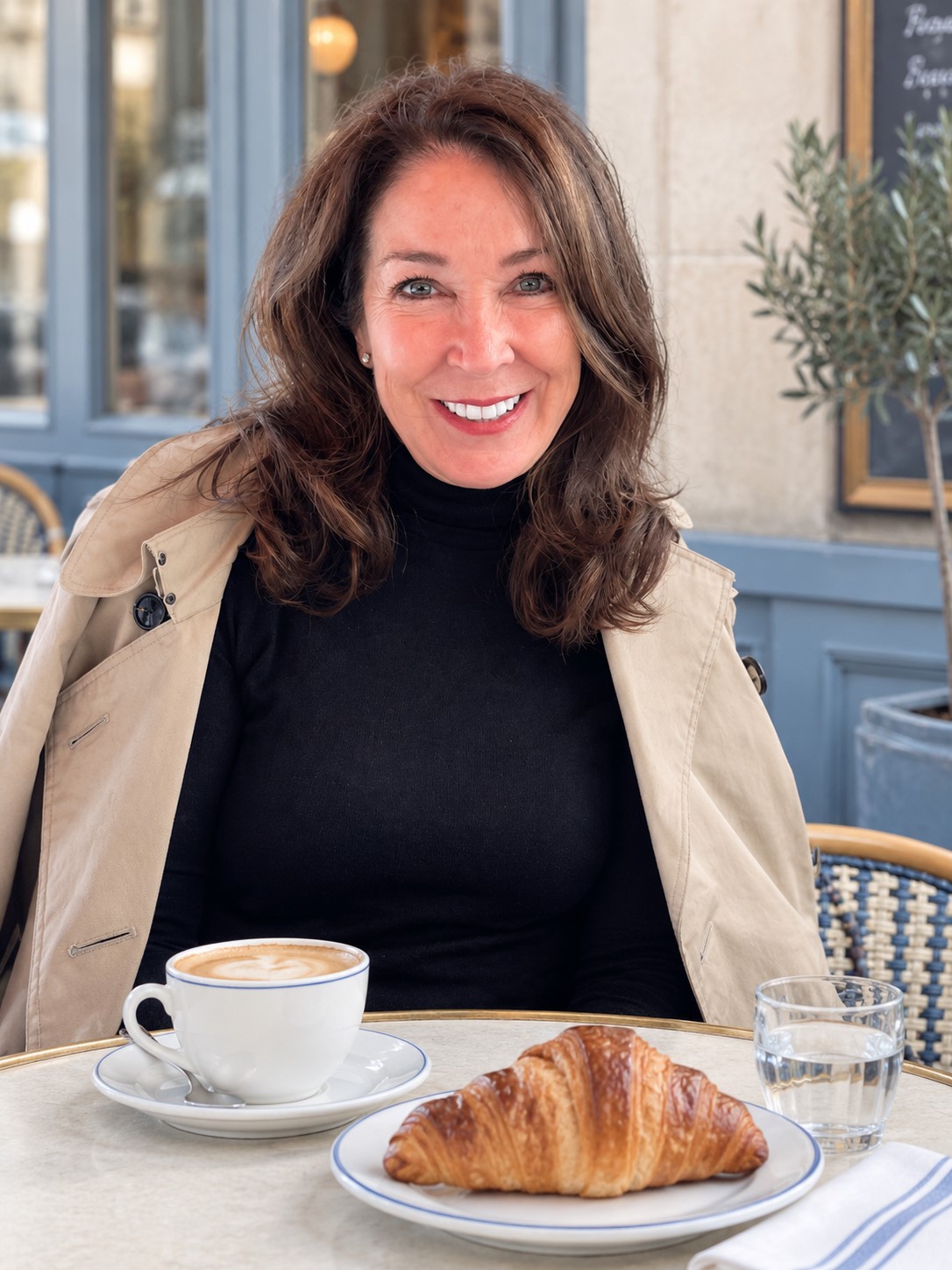

I began my blog in 2008 as a fun and creative outlet to share musings about my time in Paris, the things I love, making the most of your travels, and how to bring everyday France into your everyday life—no matter where you live.
Join The Email List
Sign up to receive blog posts delivered straight to your inbox