
Œufs en Cocotte: A Simple, Seasonal French Recipe
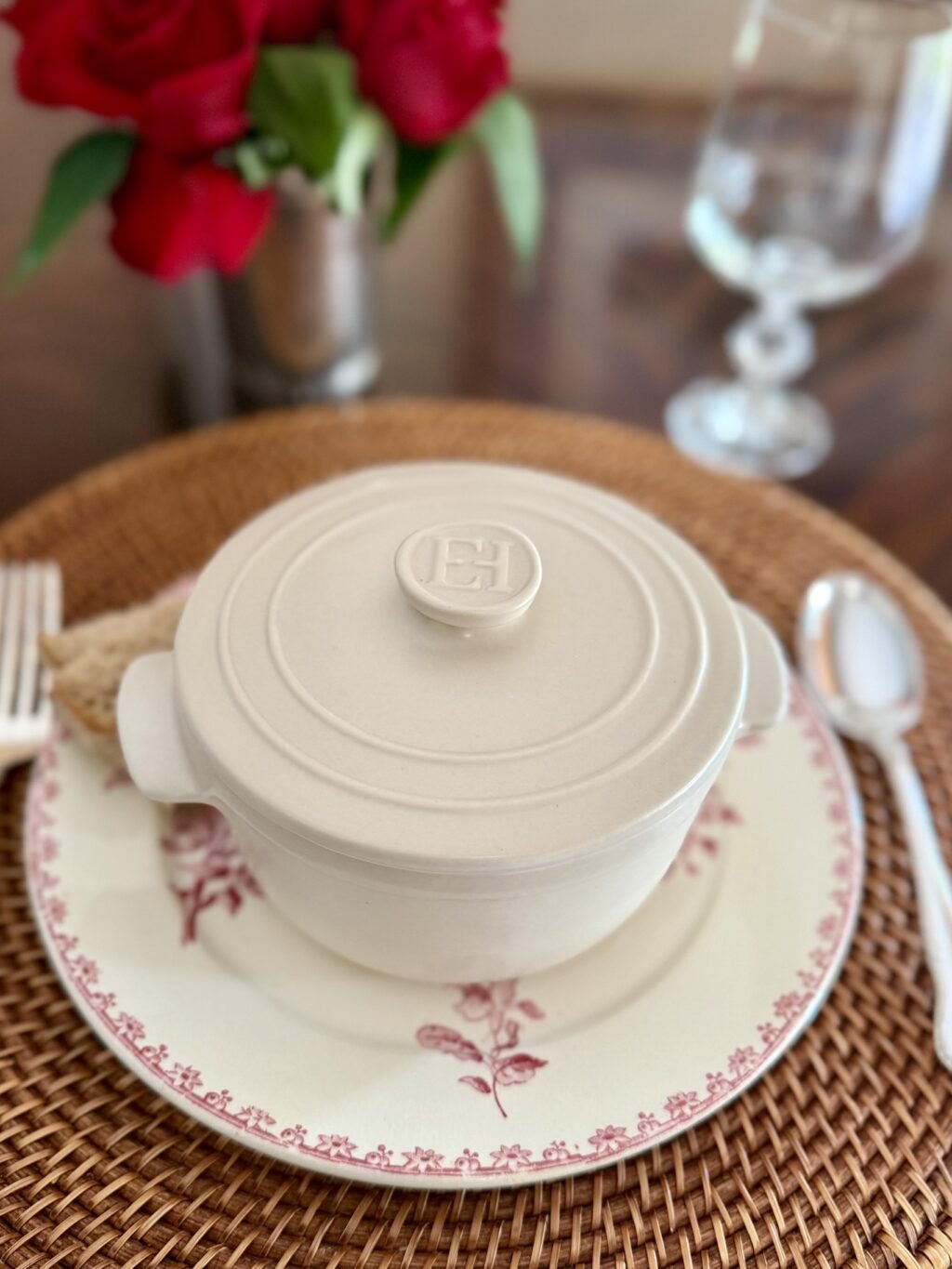
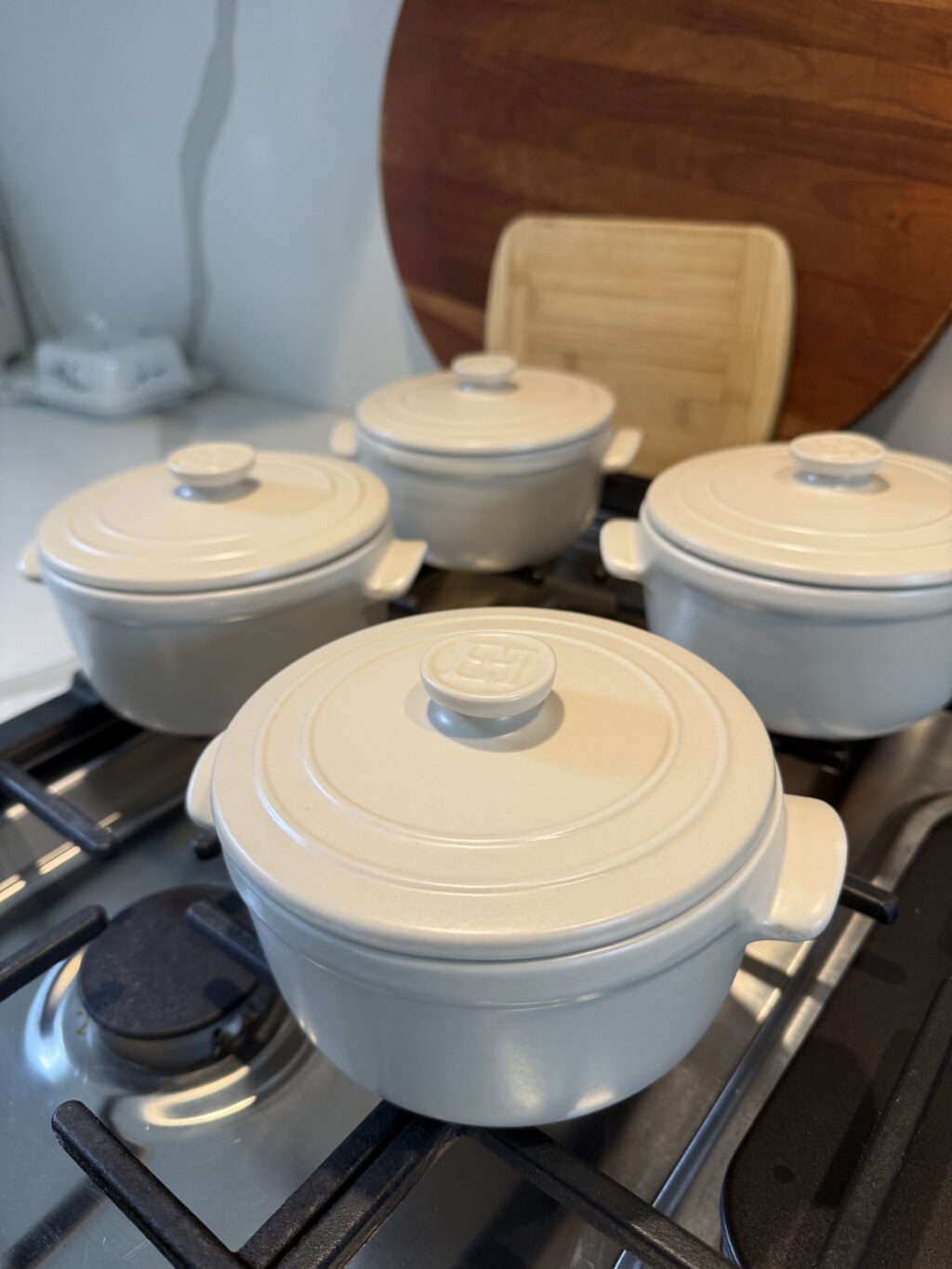
I saw the Emile Henry Solo Individual Baking Dishes in Paris and, honestly, everything else faded for a moment. They were displayed on a beautifully set table—one covered dish at each place setting—and I fell in love with the idea instantly.
My mind went straight to what they could hold: a slow-simmered Boeuf Bourguignon, bubbling French onion soup topped with melted cheese, œufs en cocotte nestled into cream and herbs. But it wasn’t only about the recipes. It was the ritual of it all—individual portions arriving at the table, warm, personal, and quietly considered.
I decided to try my hand at œufs en cocotte—a dish I had never made before. The recipe turned out to be very simple and a perfect for weekend brunch dish, so I am sharing it with you.
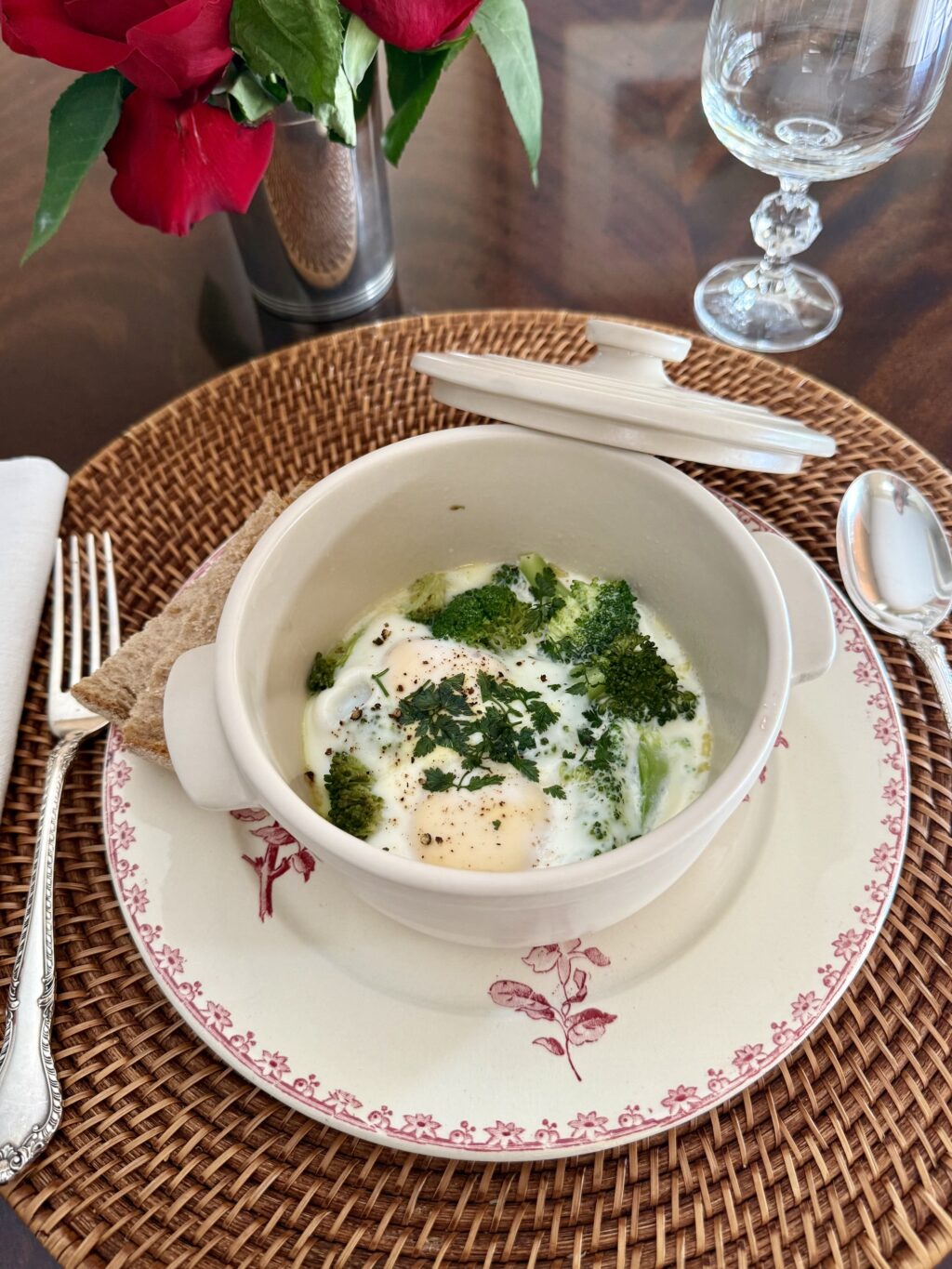
Ingredients
- 4 large eggs (2 per person)
- 2 cups broccoli florets, steamed until just tender
- 4–6 tbsp crème fraîche or heavy cream
- 1 tbsp unsalted butter, softened
- 1 tsp garlic powder
- 2 tbsp flat-leaf parsley, finely chopped
- Fine sea salt and freshly ground black pepper
- Optional: a spoonful of grated Gruyère
Instructions
- Prepare the Broccoli: Trim the broccoli into small, even florets. Steam for 3–4 minutes, until bright green and just tender with a slight bite. Drain well and set aside.
- Preheat the Oven: Preheat to 350°F (175°C). Bring a kettle of water to a simmer for the bain-marie.
- Create the base: Butter each baking dish generously. Divide the broccoli evenly, then season with salt, pepper, garlic powder, and half the parsley.
- Add richness: Spoon 2–3 tablespoons of crème fraîche over each dish, allowing it to settle between the florets.
- Add the eggs: Crack two eggs into each dish, keeping the yolks intact. Season lightly with salt and pepper.
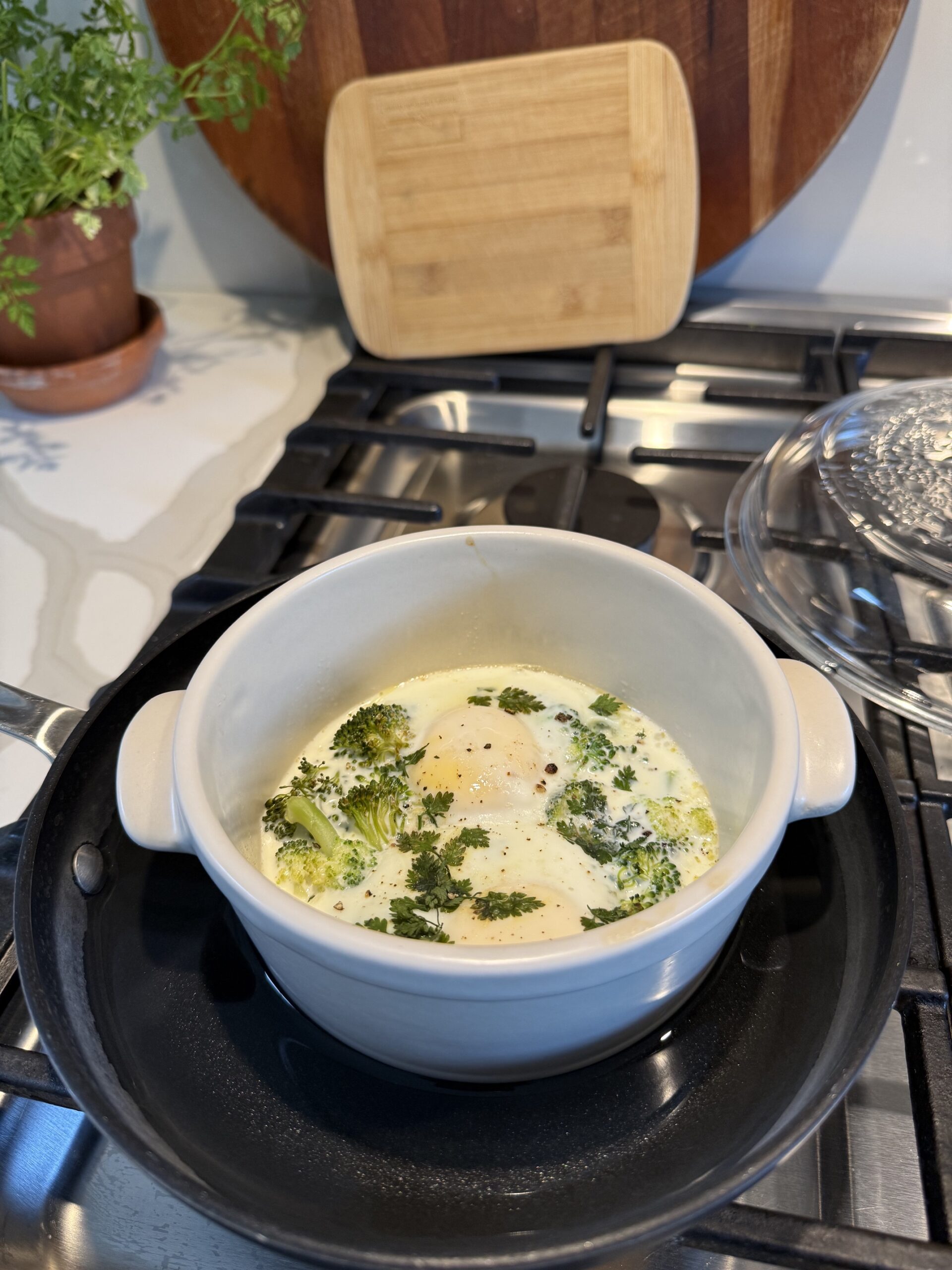
- Bake: Place dishes in a roasting pan and add hot water to reach halfway up the sides. Bake for 12–16 minutes, until the whites are set and the yolks remain softly runny.
- Finish: Remove carefully and rest briefly. Sprinkle with remaining parsley and a little Gruyère if using. Serve immediately with toast points.
In many ways, œufs en cocotte is like quiche—you can easily adapt it depending on taste, what you have on hand, and what is in season. Think spring asparagus or peas, summer tomatoes and basil, autumn mushrooms and thyme, or winter leeks softened in butter. The ingredients change with the calendar, but the idea remains the same: simple, seasonal, and quietly indulgent.
No matter how you choose to make it—enjoy every bite.
Bonne dégustation!

Join the email list and get instant access to My Essential Packing Guide!
It's a curated list of the tried-and-true items I always pack for stress-free, stylish trips, and it’s ready to help you pack for your next adventure!


I began my blog in 2008 as a fun and creative outlet to share musings about my time in Paris, the things I love, making the most of your travels, and how to bring everyday France into your everyday life—no matter where you live.
Join The Email List
Sign up to receive blog posts delivered straight to your inbox