
Marie Antoinette and the French Revolution
On July 14, France celebrates la Fête Nationale, commemorating the storming of the Bastille in 1789 and the beginning of a revolution that would forever transform the nation. It is a day associated with the ideals of Liberté, Égalité, Fraternité—the motto of the French Republic.
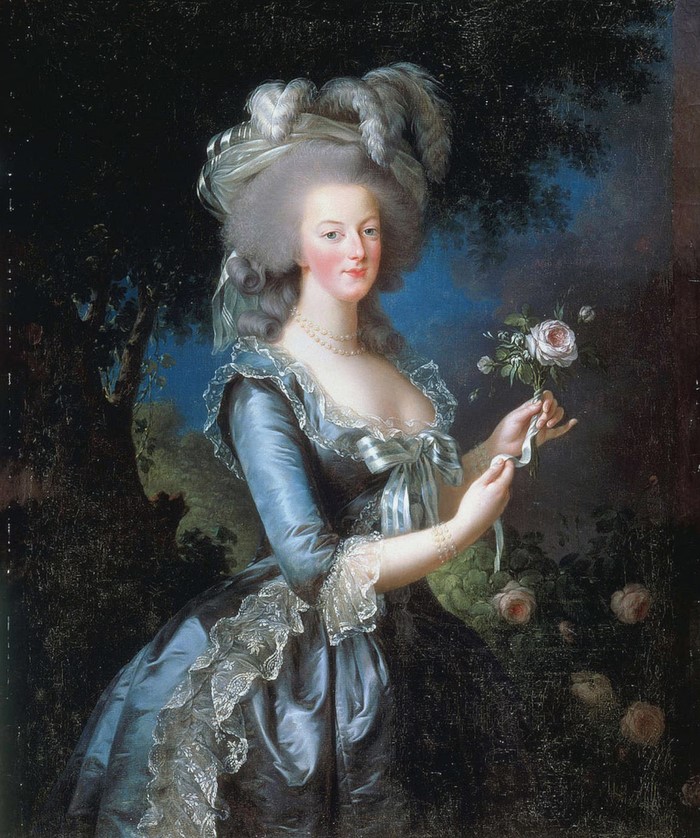
Yet behind these grand ideals and historic moments are the deeply personal stories of those who lived through this extraordinary period, including Marie Antoinette, the last queen of France.
I have long been fascinated by European monarchies and the history of Marie Antoinette and the French Revolution. Earlier this summer, I offered a copy of Antonia Fraser’s biography Marie Antoinette: The Journey as a read-along with me giveaway. I have been slowly making my way through the book—admittedly poking ahead a few chapters—in preparation for today’s post.
Fraser’s portrayal is far more nuanced than the caricature that has endured for more than two centuries, offering a perspective far more nuanced than the caricature that has endured for more than two centuries, exploring the pressures, expectations, and personal tragedies that shaped her life.
Marie Antoinette’s Journey from Austrian Archduchess to Queen of France
Born an Austrian archduchess, Marie Antoinette was sent to Versailles at the age of 14 as part of a political alliance between two powerful European families.
Her marriage to the future Louis XVI was intended to strengthen the relationship between Austria and France, but for the young teenager arriving at Versailles, it meant leaving behind everything familiar—her family, her homeland, and the life she had known.
At the age of 19, she became queen of France following the accession of Louis XVI in 1774, inheriting not only a crown but also the enormous expectations placed upon her as a representation of the French monarchy.
By the time the Bastille fell on July 14, 1789, Marie Antoinette’s world was already beginning to unravel. France was facing a severe financial crisis, bread shortages were affecting ordinary citizens, and calls for political reform were growing louder.
The monarchy, once viewed as a symbol of stability and tradition, had become associated by many revolutionaries with privilege and inequality.
The Extraordinary Expectations Placed on a Young Queen
When I read these details, I find myself thinking of my own nieces. One is fourteen; another is nineteen.
They are bright, thoughtful young women with their entire lives ahead of them, still discovering who they are and what they hope to become. It is almost impossible for me to imagine either of them leaving home permanently, entering a foreign country, and carrying the weight of a kingdom on their shoulders.
Even today, we witness the extraordinary scrutiny placed upon women such as Catherine, Princess of Wales, and Crown Princess Victoria of Sweden. Every appearance, every photograph, every public gesture is analyzed and discussed.
While their circumstances are vastly different from those of Marie Antoinette, it reminds me that the expectations placed upon royal women are and always have been extraordinary.
Marie Antoinette and the Propaganda of the French Revolution
Marie Antoinette became one of the most recognizable and reviled figures of the French Revolution.
In the years leading up to the Revolution, she was the subject of numerous defamatory pamphlets, known in French as libelles. Many of these were pornographic, misogynistic, and deliberately designed to destroy her reputation.
These publications portrayed her as immoral, extravagant, and unfit to be queen. The attacks were not simply criticism of her political role; they were deeply personal attempts to undermine the legitimacy of the monarchy itself.
The spread of these sensational stories reminds me of how public figures today can be targeted by defamatory media and tabloid culture. While the methods have changed, the desire to create a scandalous narrative around a public figure is not new.
The Truth Behind the “Let Them Eat Cake” Myth
Rumors and accusations surrounded Marie Antoinette throughout her life, including the infamous phrase “Let them eat cake,” which historians widely agree she never said.
The quotation became one of the most enduring myths associated with her, reinforcing the image of a queen who was detached from the suffering of ordinary citizens. Her lavish lifestyle at Versailles made her an easy target, yet her story was far more complicated than the image created by revolutionary propaganda.
Marie Antoinette was a young woman placed into an impossible position: expected to embody the grandeur of the French monarchy while living through a period of extraordinary economic hardship and political transformation.
The Fall of Versailles: Marie Antoinette During the French Revolution
The fall of the Bastille marked the beginning of a period of uncertainty and fear for the royal family.
Just months later, in October 1789, thousands of Parisian women marched to Versailles, forcing Louis XVI and Marie Antoinette to leave the palace and move to the Tuileries Palace in Paris. Their role as monarchs continued, but their freedom and authority diminished with each passing month.
The royal family was no longer protected by the traditional power of the monarchy. They had become symbols of a system many revolutionaries wanted to dismantle.
The Capture, Trial, and Execution of Marie Antoinette
In 1791, the royal family’s attempted escape from Paris ended at Varennes when they were recognized and captured.
This moment further damaged public trust and accelerated the movement toward abolishing the monarchy. Following the establishment of the French Republic, Louis XVI was executed in January 1793. Marie Antoinette was imprisoned, separated from her family, and ultimately executed by guillotine on October 16, 1793.
The woman who had arrived at Versailles as a young Austrian archduchess and later become Queen of France met her fate during one of history’s most dramatic political transformations.
Visiting Versailles Today: Remembering the Last Queen of France
Visiting Versailles today, it is impossible not to reflect on the dramatic contrast between the grandeur of the palace and the fate of those who once inhabited it.
The Hall of Mirrors, the gardens, and the elegant apartments remain reminders of a world that seemed permanent—until history proved otherwise.
Walking through Versailles, one can almost imagine the lives that unfolded within those walls: the ceremonies, celebrations, private struggles, and ultimately the uncertainty that surrounded the royal family during the final years of the monarchy.
Marie Antoinette’s Legacy: Beyond the Myth
On Bastille Day, as France celebrates the ideals born from the Revolution, Marie Antoinette’s story offers another perspective.
Revolutions are often remembered through dates, battles, and political movements, but they are also lived through individuals—their hopes, fears, mistakes, and heartbreak.
Perhaps that is why Marie Antoinette continues to fascinate us. Beyond the myth, beyond the criticism, and beyond the image preserved in history books, there was a woman who found herself at the center of one of history’s greatest transformations.
Her story reminds us that history is not only about the events that changed nations—it is also about the human beings who lived through them.
Your Thoughts
What are your thoughts on France’s last queen? Drop a comment below—have you read Antonia Fraser’s biography, and do you feel the Marie Antoinette let them eat cake myth has unfairly defined her legacy?
Join the email list and get instant access to My Essential Packing Guide!
It's a curated list of the tried-and-true items I always pack for stress-free, stylish trips, and it’s ready to help you pack for your next adventure!
4 Comments
Leave a Comment

I began my blog in 2008 as a fun and creative outlet to share musings about my time in Paris, the things I love, making the most of your travels, and how to bring everyday France into your everyday life—no matter where you live.
Join The Email List
Sign up to receive blog posts delivered straight to your inbox



Well done analysis. A tragic story and to this day, I do not envy anyone living a Royal life. With all of its privileges, it is a complicated life of trying to please a divided population.
Thank you so much. I’m happy to know you enjoyed the post.
Through most of what I have read about Marie Antoinette, I believe that she never spoke those words. It was propaganda circulated by her enemies.
Yes, that is my understanding as well.