
Five French Novels Every Francophile Should Know
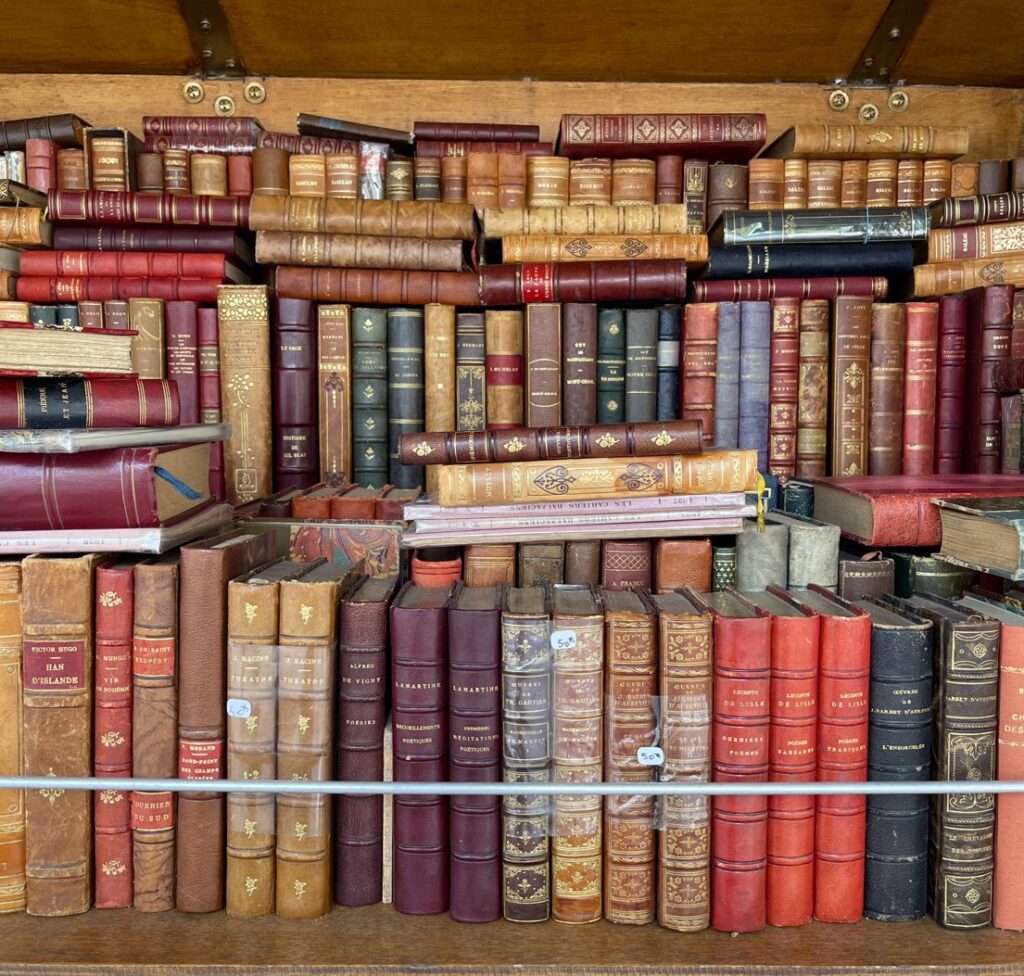
When I studied French in college, reading classics like Les Misérables and Candide felt more like an academic obligation than a cultural adventure. At the time, I didn’t realize how profoundly these books would shape my understanding of French culture, humor, and even the French way of seeing the world. Now, years later, I can see how each one offers a window into the heart of France — its history, its values, and its unmistakable literary flair.
If you love France and want to dive deeper than travel guides and cafés, here are five French classics I suggest you know and why they matter.
No. 1 │ Madame Bovary by Gustave Flaubert (1857)
Madame Bovary was the first French novel I ever read in French. It taught me so much about French perspective, especially as it relates to my own cultural heritage. Whether correct or not, I could not help but compare Emma Bovary to Hester Prynne, the female protagonist in Nathaniel Hawthorne’s The Scarlet Letter. Both offer insight into the role of women within their community and how they respond to societal constraints. The difference it striking.
Moreover, Madame Bovary illustrates the precision and elegance of Gustave Flaubert’s prose. At first, Emma Bovary’s frustrations might seem like melodrama. But, Flaubert’s piercing realism uncovers the limitations of provincial life, societal expectation, and gender roles in 19th-century France. The subtlety of his satire is a perfect illustration of French wit—often understated, yet cuttingly insightful.
What makes Emma Bovary feel so strikingly modern is that she lives less in her actual life than in the version she believes she deserves—a kind of 19th-century prototype of today’s aspirational woman. When you think about it, she doesn’t feel so far removed from our own moment, shaped by what she consumes and quietly dissatisfied by the gap between imagined life and lived reality.
The Takeaway: Francophiles will appreciate the elegance of Flaubert’s prose and the insight into French bourgeois culture.
No. 2 │ Les Misérables by Victor Hugo (1862)
Victor Hugo’s epic is not just a story of Jean Valjean and the Parisian underclass; it’s a sweeping portrait of 19th-century French society. The novel’s moral force is set in motion by a deceptively simple question: is it just to imprison a man for stealing bread to survive? Valjean’s punishment for this act—far harsher than the crime itself—becomes Hugo’s lens for examining the gap between law and justice.
That question finds its most powerful counterpoint in the unforgettable scene with Bishop Myriel. When Valjean, newly released from prison, steals his silver and is caught, the bishop does something extraordinary—he insists the silver was a gift, sparing him from re-arrest, and even presses more into his hands. In that moment, mercy triumphs over judgment, and Valjean’s life is irrevocably changed.
Themes of justice, redemption, and revolution echo far beyond the pages, revealing how history and morality intertwine in the French imagination. Through figures like Javert, who embodies the rigid authority of the law, Hugo contrasts legal order with grace, ultimately asking what a just society truly looks like. Reading Les Misérables shows why Parisians continue to value social conscience, human dignity, and the spirit of rebellion.
The Takeaway: The novel offers a deep dive into Parisian life, the plight of the poor, and the moral and social conscience of France.
No. 3 │ Le Petit Prince by Antoine de Saint-Exupéry (1943)
This little book by Antoine de Saint-Exupéry may have been written for children, but it’s a philosophical treasure. Its reflections on love, friendship, and human nature capture the poetic whimsy of French culture. Knowing Le Petit Prince isn’t just about understanding a beloved story—it’s about recognizing the references you’ll encounter everywhere in France, from café illustrations to museum gift shops, and appreciating the French talent for blending simplicity with profound meaning.
I was reminded of just how deeply it’s woven into everyday life at a wedding I attended in France, where a passage from the book was read during the ceremony: “On ne voit bien qu’avec le cœur” (“One sees clearly only with the heart”). In that quiet, intimate moment, the words felt less like literature and more like a shared cultural language.
The Takeaway: Francophiles will spot its presence everywhere in France—from quotes like “On ne voit bien qu’avec le cœur” to imagery of the rose, the fox, and the little prince himself—woven into art, design, and even life’s most meaningful moments.
No. 4 │ Candide by Voltaire (1759)
Voltaire—born François-Marie Arouet—is one of the great masters of French satire. His biting humor in Candide is a masterclass in wit. I’ll admit, reading it was a bit of a grind for me—I’m not naturally drawn to sarcasm and irony—but working through it, combined with my professor’s infectious enthusiasm, gave me a deep appreciation for the French love of cleverness and intellectual boldness. The novella skewers blind optimism, religion, and political hypocrisy in a way that is witty, cynical, and deeply human.
What made the course even more illuminating was reading Candide alongside excerpts from Jean-Jacques Rousseau. Whereas Voltaire delights in irony and skepticism—laughing at human folly, corrupt institutions, and organized religion—Rousseau offers earnest moral philosophy, emphasizing human virtue, natural goodness, and the ways society can corrupt it. Experiencing them side by side in college highlighted the tension at the heart of the French Enlightenment: a culture capable of both sharp critique and idealistic reflection.
What makes Candide feel so relevant today is how familiar its targets remain. The tendency toward naïve optimism, the questioning of authority, and the sharp critique of power structures are still very much part of contemporary French discourse—whether in media, politics, or everyday conversation. Europeans often approach religion with a similar kind of skepticism: it’s not always hostile, but literalist or dogmatic beliefs can be met with irony or even gentle mockery, “as if they believe in magic.” Voltaire set the template for this approach centuries ago, showing that humor can be a lens for serious moral and social reflection.
The Takeaway: Knowing Candide helps you recognize the roots of French satire—where humor isn’t just entertainment, but a way of questioning the world, challenging authority, and engaging in intellectual life. That combination of wit, skepticism, and moral reflection remains a hallmark of French thought, and gives context to the way many Europeans view religion and power even today.
No. 5 │ À la recherche du temps perdu (In Search of Lost Time) by Marcel Proust (1913–1927)
Proust is a challenge, yes — and, for me, even more daunting than Dickens, which is saying something. I’ve read only sections of his masterpiece, yet even these excerpts meander through memory, society, and the inner life with a patience-testing precision that can make even the most devoted reader pause. Yet they are also a masterclass in French subtlety and observation.
Perhaps the most famous moment is the madeleine episode. The taste of the iconic shell-shaped cake dipped in tea unlocks a flood of childhood memories—a reminder that even the simplest sensory experiences, like a sip of coffee or the scent of fresh bread, can instantly transport us back in time. This scene perfectly illustrates Proust’s fascination with memory, sensory experience, and how seemingly small details shape our understanding of life. Reading even excerpts of Proust teaches patience, attentiveness, and an appreciation for nuance — qualities that continue to define the French approach to culture, conversation, and art today.
The Takeaway: Essential reading—or selective reading—for anyone who wants to understand the subtleties of French culture, manners, and artistic sensibility.
Why These Books Matter for Francophiles
At the time I read these books, I didn’t realize how deeply they would shape my understanding of France. They reveal social hierarchies, historical shifts, humor, philosophy, and the French obsession with artful living. For any Francophile, reading them is like learning the language of French culture itself — not just words, but values, wit, and worldview.
Choosing just five was nearly impossible. I went back and forth, considering substituting one for another, but in the end, these five felt right. After all, no one is saying you shouldn’t read more! Even decades later, I return to these works for context, inspiration, and the subtle joys of French thought.
If you want to go beyond sightseeing, beyond menus and markets, these five books are essential companions on your journey into the heart of France. And who knows — you might find yourself perched at a café or reclining on a garden bench, a tome in hand, savoring the moment — now that would be very French indeed!
Bonnes lectures !

Join the email list and get instant access to My Essential Packing Guide!
It's a curated list of the tried-and-true items I always pack for stress-free, stylish trips, and it’s ready to help you pack for your next adventure!
4 Comments
Leave a Comment


I began my blog in 2008 as a fun and creative outlet to share musings about my time in Paris, the things I love, making the most of your travels, and how to bring everyday France into your everyday life—no matter where you live.
Join The Email List
Sign up to receive blog posts delivered straight to your inbox



Jeannine
Thank you for reminding what France is about. And the deep French culture.
Merci!
Excellent book selections!
Thank you!