What Makes the Marais So Special?
Le Marais is without a doubt one of Paris’s most beloved neighborhoods — a must-see for anyone traveling to the city. Cobblestone streets, centuries-old mansions, chic boutiques, and cafés tucked beneath leafy trees — it’s no wonder travelers fall under its spell. Since it’s such a favorite destination, I thought I’d share a bit of its history and what makes it so special.
Once a swamp (marais literally means “marsh”), this part of Paris was drained and developed in the Middle Ages. By the early 1600s, it had become the city’s most fashionable district — a haven of grand hôtels particuliers, private courtyards, and leafy gardens. And at its heart is Place des Vosges, commissioned by Henri IV (my favorite French king) and widely considered the square that first defined elegant Parisian life.
The Birth of a Parisian Icon
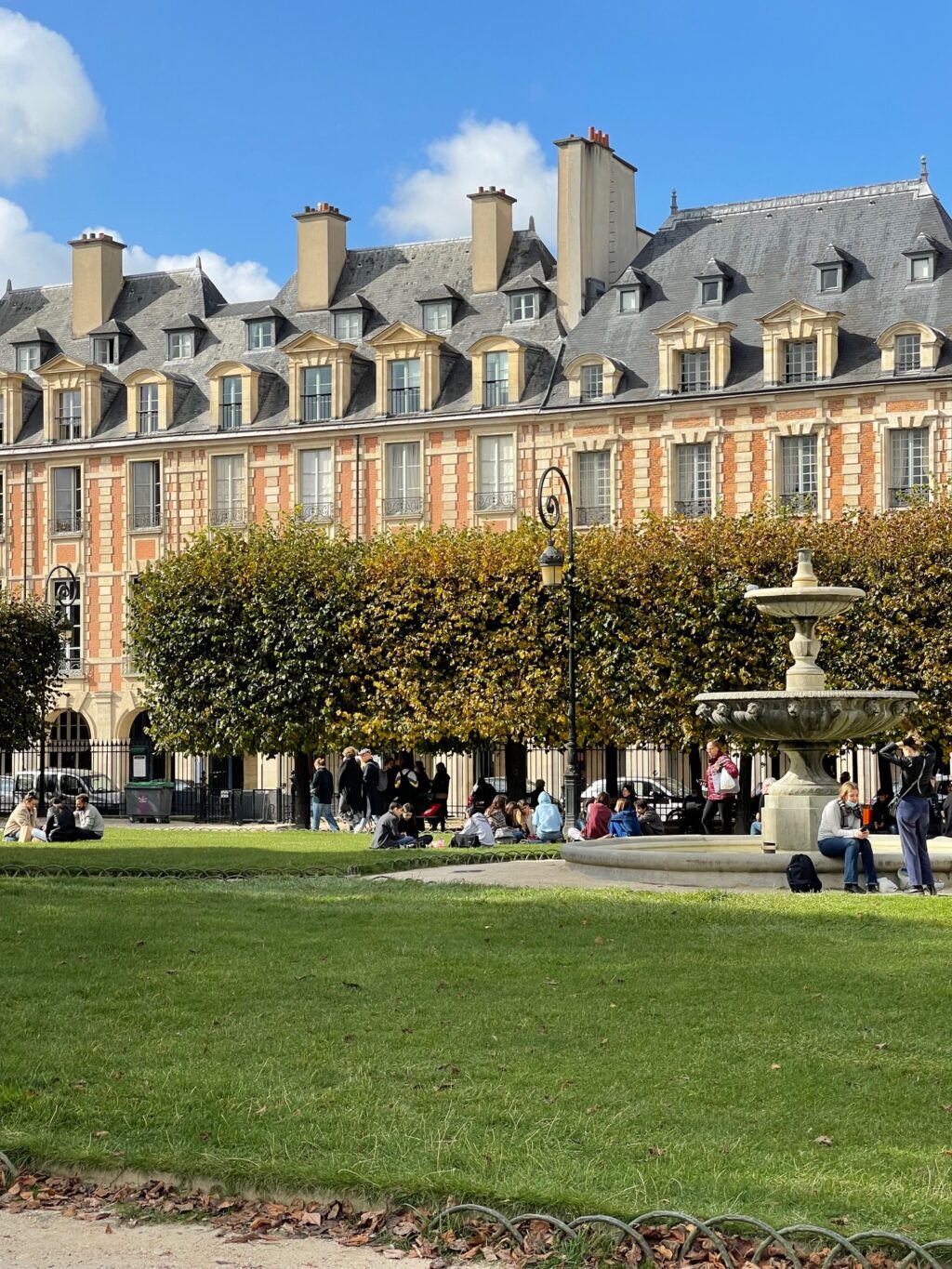
In 1605, a bold urban project transformed what had been royal stables into something entirely new: a perfectly symmetrical square surrounded by red-brick houses with stone trim and graceful arcades. Designed by architect Louis Métezeau, it was intentionally orderly and elegant — and strikingly modern for its time.
The vision belonged to King Henri IV, who imagined a Paris that was not only powerful, but beautiful and livable. Though he did not live to see the square completed (he was assassinated in 1610), his presence is everywhere in its design. He encouraged the use of brick — still uncommon in Paris at the time — and insisted on balanced proportions that give the square its quiet rhythm. I love the brick, which always takes me back to my days living in Lille.
Originally named Place Royale, it was inaugurated in 1612 during celebrations for Louis XIII’s wedding. After the Revolution, it was renamed Place des Vosges in honor of the Vosges region, the first to pay taxes to the new Republic. The architecture, however, never changed — refined, symmetrical, and quietly grand.
A Storied Square of Famous Residents
It is easy to imagine centuries of history here, but even easier to notice how alive it remains.
Victor Hugo lived at No. 6, now a museum filled with his manuscripts and sketches. Madame de Sévigné, the brilliant letter-writer of the French court, was born here. Cardinal Richelieu once held gatherings beneath these same rooftops.
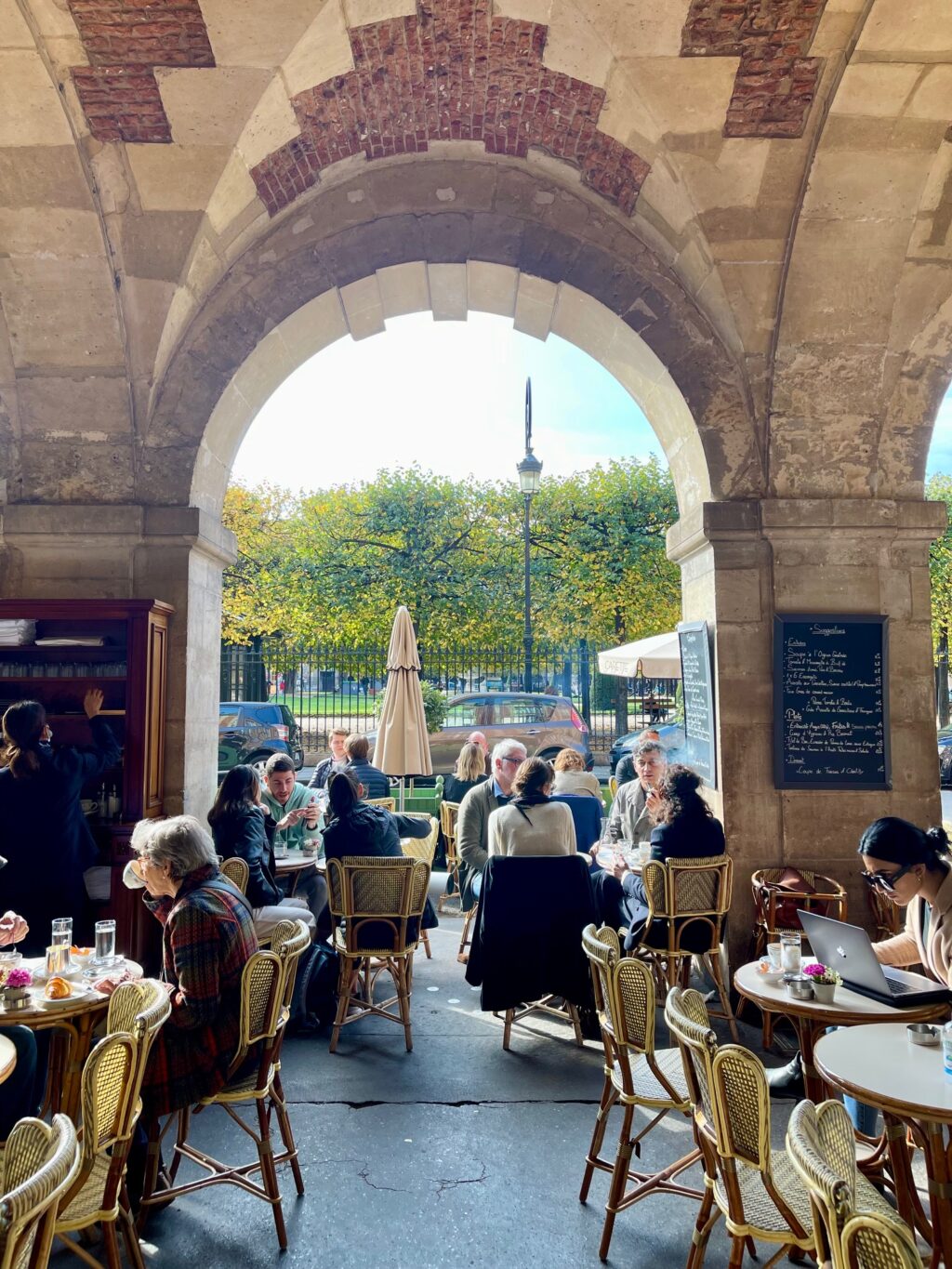
Today, the arcades shelter art galleries, antique shops, and cafés. Locals stretch out on the grass with picnic lunches while children run beneath the chestnut trees or play in the sand boxes. The square still feels like a shared living room for Paris — unhurried, elegant, and quietly social.
Architecture with Perfect Poise
The symmetry of Place des Vosges remains one of Paris’s great visual pleasures. There are 36 houses in total — all built to match, with red-brick façades, white stone accents, and steep slate roofs. At either end stand the Pavillon du Roi and the Pavillon de la Reine, framing the square exactly as Henri IV intended.
This harmony went on to influence squares across Europe, from Bordeaux’s Place de la Bourse to London’s Bedford Square. Yet few places ever capture this same sense of calm perfection.
Why It Still Matters
Place des Vosges marks a turning point — the moment Paris began to see beauty as part of everyday life. It is both grand and human-sized, formal yet inviting. Sit on a bench here on a sunny afternoon and you feel what makes Paris, well, Paris: conversation, community, and effortless grace.
Perhaps that is the best tribute to Henri IV — a king remembered not only for politics, but for imagining a city where ordinary life could feel extraordinary.
When You Go
There are many beautiful squares in the world, but only one Place des Vosges — a perfect balance of symmetry and soul, where history, art, and everyday life quietly overlap.
- Grab coffee or lunch at Carette under the arcades — one of the best spots for people-watching in all of Paris.
- Visit Victor Hugo’s apartment at No. 6 to step back into 19th-century literary life.
- Step into the Musée Carnavalet, where the story of Paris unfolds room by room, from medieval streets to revolution and modern transformation.
- Continue on to the Musée Picasso, housed in the elegant Hôtel Salé, where centuries of beauty and experimentation trace the arc of one of the 20th century’s most influential artists.
- Explore the Hôtel de Sully, a hidden gem just off the square, and wander through its elegant courtyard before passing through into Place des Vosges itself.
- Then take a seat in the square. After four centuries, it’s still where Paris comes to breathe.
There are so many beautiful squares in the world, but only one Place des Vosges. It’s the perfect balance of symmetry and soul — a space where history, art, and everyday life come together.


Join the email list and get instant access to My Essential Packing Guide!
It's a curated list of the tried-and-true items I always pack for stress-free, stylish trips, and it’s ready to help you pack for your next adventure!


I began my blog in 2008 as a fun and creative outlet to share musings about my time in Paris, the things I love, making the most of your travels, and how to bring everyday France into your everyday life—no matter where you live.
Join The Email List
Sign up to receive blog posts delivered straight to your inbox