
Alexis de Tocqueville and the Meaning of American Exceptionalism
There are certain moments when history suddenly feels very present.
As the United States enters another midterm election season, Americans inevitably begin thinking about what kind of country we are, what we value as a society, and whether the people we elect truly represent those values. The political conversation will be filled with familiar questions about our national identity, our cultural priorities, the role of government, and the responsibilities of those who serve in public office.
It is also a time when one particular phrase begins to appear with increasing frequency: American exceptionalism.
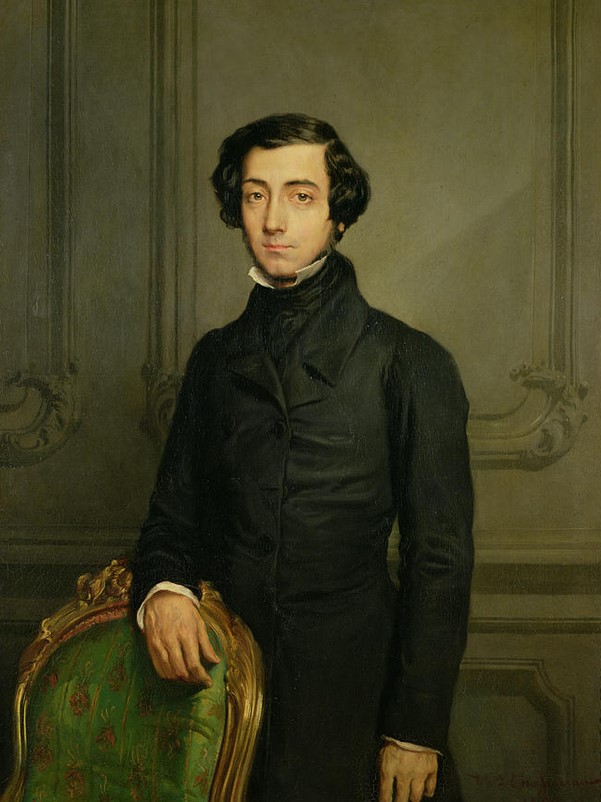
I have always found the phrase fascinating, not only because of what it has come to mean today, but also because of its connection to France. Nearly 200 years ago, a young French aristocrat named Alexis de Tocqueville traveled through the United States to observe a young democracy whose social and political conditions were considerably different from those of Europe. What he saw would become the foundation of his landmark work, Democracy in America. His observations are still invoked today whenever we discuss what makes the United States distinctive.
I read Democracy in America in a college classroom under the guidance of a very enthusiastic professor. Perhaps that is why, whenever I hear American exceptionalism casually invoked, I find myself wondering: How many people using the term have actually read the book and how many understand what Tocqueville meant when he described America as “exceptional?”
Alexis de Tocqueville’s Journey to America
In 1831, Alexis de Tocqueville embarked on a journey across the United States with his colleague Gustave de Beaumont. They were sent to study the American prison system, but Tocqueville quickly realized he was witnessing something much bigger: a society experimenting with democracy on an unprecedented scale.
Traveling by steamboat, horseback, and carriage, Tocqueville visited Boston, New York, Philadelphia, Washington, D.C., Charleston, and the Ohio frontier. He observed citizens, local governments, civic institutions, and even the landscape. He meticulously documented how American equality, civic associations, and political participation shaped daily life and national culture. His observations are the basis of Democracy in America.
The Context: Democracy in America
Published in two volumes, in 1835 and 1840, Democracy in America is a reflection of Tocqueville’s belief that America’s political and social circumstances were distinctive. He did not coin the modern phrase “American exceptionalism,” but he did describe the position of the United States as exceptional. That observation would later become associated with a broader ideological concept.
In Volume II, Tocqueville writes:
“It must be acknowledged that in few of the civilized nations of our time have the higher sciences made less progress than in the United States; and in few have great artists, distinguished poets, or celebrated writers been more rare. Many Europeans, struck by this fact, have looked upon it as a natural and inevitable result of equality…”
These observations reveal several distinctive conditions of early nineteenth century America:
- A society without a rigid aristocracy, in contrast to Europe
- Widespread equality of social conditions, meaning fewer entrenched social hierarchies
- Limited development of the arts and higher sciences, as the young nation prioritized practical and civic pursuits
- A strong culture of civic associations and local governance that encouraged citizen participation
- An active democratic ethos, with people involved in shaping laws and policies directly
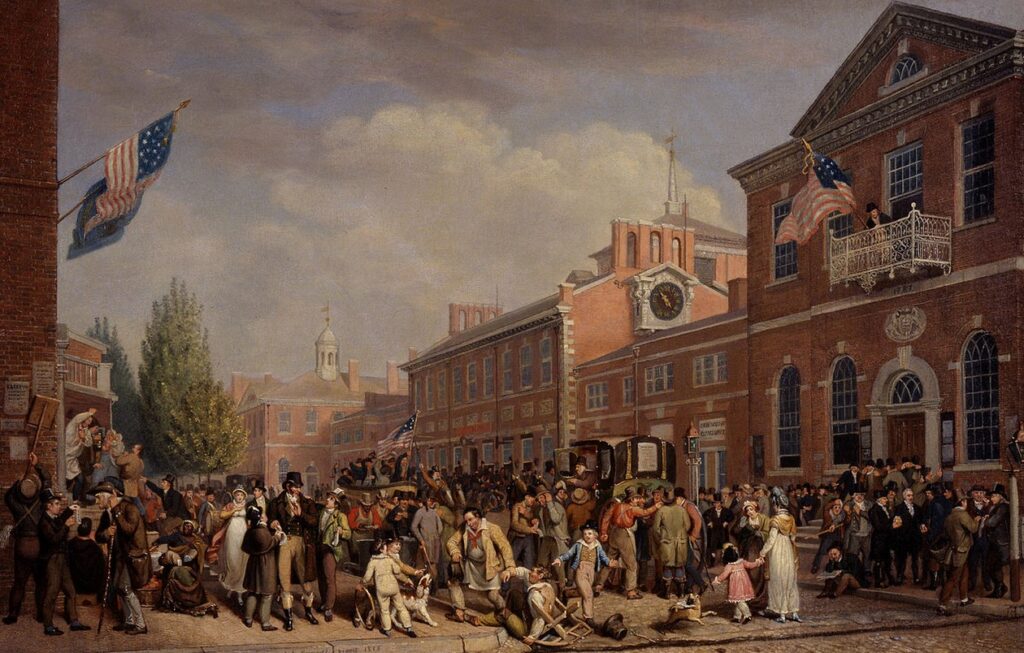
Tocqueville also noted that America’s vast lands, civic institutions, and egalitarian social structures allowed individuals from modest backgrounds to pursue opportunities. In this environment, personal initiative and merit could play a significant role in shaping one’s future.
Only after outlining these conditions does Tocqueville conclude:
“The position of the Americans is therefore quite exceptional, and it may be believed that no democratic people will ever be placed in a similar one.”
What Tocqueville Meant and What He Did Not Mean
What he meant:
- America’s social and political circumstances were distinct from those of Europe.
- Democracy could flourish in a large, geographically expansive society.
- Civic institutions, local self governance, and voluntary associations were essential to liberty.
What he did not mean:
- He did not claim that Americans were inherently superior to other peoples.
- He did not imply that America possessed a divine or predetermined historical destiny.
- He did not use the modern term “American exceptionalism,” which appeared in English nearly a century later.
Tocqueville’s use of “exceptional” was descriptive, comparative, and grounded in historical context. His observations helped shape later interpretations of American distinctiveness, but they were not a declaration of moral superiority or an assertion of national destiny.
Modern Interpretations: How the Meaning Has Shifted
Today, “American exceptionalism” is often interpreted as:
- A moral claim about American superiority
- A justification for intervention abroad
- An assertion of a unique national destiny
These modern interpretations can depart considerably from Tocqueville’s careful, observational approach. His purpose was to analyze the conditions of American democracy rather than simply celebrate them. Understanding this distinction allows us to appreciate his insights as an examination of historical and political realities rather than an endorsement of any particular ideology.
Why Tocqueville Still Matters
Tocqueville reminds us that democracy is not a static achievement but an ongoing practice. His observations emphasize the importance of:
- Civic participation
- Engagement with civil society
- Responsiveness to changing social conditions
These lessons remain relevant today, offering insight into the institutions and civic habits that help sustain liberty. Tocqueville came to America to understand what made its democracy distinctive. Nearly two centuries later, his observations remain a valuable starting point for considering what sustains it and what might put it at risk.
A Recommendation for Further Exploration
If you would like to better understand Tocqueville without reading Democracy in America, consider C SPAN produced a fascinating program, “Retracing the Steps of Alexis de Tocqueville’s 1831 Journey,” which follows his route through early nineteenth century America.
The program illustrates the towns, landscapes, and civic institutions he studied, offering a modern perspective on the historical context of his observations. I watched the series when it first aired and highly recommend it to you, especially if you are seeking to better understand the roots of American democracy through a transatlantic lens.
Travel Tip: Visit Château de Tocqueville in Normandy
For those wishing to connect with Tocqueville’s French roots, a visit to his family estate offers a tangible link to his life and early influences.
Location: Château de Tocqueville, Tocqueville, Manche, Normandy, France
What to see: The château is privately owned, but visitors can view the family cemetery, where Alexis de Tocqueville is buried, and explore the surrounding area to reflect on the region that shaped his upbringing.
Why visit: The estate and Normandy countryside offer a glimpse into the aristocratic and civic environment that influenced Tocqueville’s perspectives on society, governance, and democracy.
Travel tip: If you are planning a trip to Normandy, consider adding the Château de Tocqueville to your itinerary. Pair your visit with a broader exploration of the region, where history, culture, and the French landscape offer a deeper appreciation of the world that shaped Tocqueville’s thinking.
In Conclusion
Whether you choose to read Democracy in America, watch the C-SPAN series, or visit the Château de Tocqueville in Normandy, exploring Alexis de Tocqueville’s life and ideas offers a valuable perspective on the principles that have shaped our nation. His observations about democracy, liberty, and the responsibilities of citizenship remain remarkably relevant today. To understand Tocqueville is to better understand not only America’s founding ideals, but also the challenges of preserving them for future generations.


Join the email list and get instant access to My Essential Packing Guide!
It's a curated list of the tried-and-true items I always pack for stress-free, stylish trips, and it’s ready to help you pack for your next adventure!


I began my blog in 2008 as a fun and creative outlet to share musings about my time in Paris, the things I love, making the most of your travels, and how to bring everyday France into your everyday life—no matter where you live.
Join The Email List
Sign up to receive blog posts delivered straight to your inbox