Five Major Exhibitions to See in Paris This Fall
If there is one thing I love about Paris in the fall, it’s the return of the cultural calendar—it’s replete with new exhibitions and several tempting reasons to spend an afternoon wandering through a museum. This fall is shaping up to be an especially good one.
If you are planning a trip to Paris this fall—or even looking ahead to a winter visit—these are the five exhibitions I would put on your list.
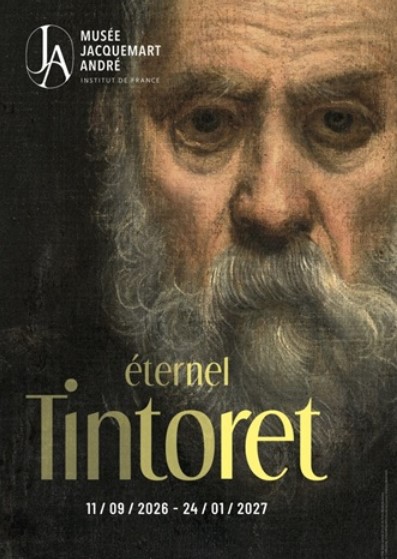
Éternel Tintoret — Musée Jacquemart-André
September 11, 2026 – January 24, 2027
One of my favorite Paris museums, the Musée Jacquemart-André, has opened its fall season with Éternel Tintoret, a major exhibition devoted to Jacopo Robusti, known as Tintoretto (1518/19–1594), one of the great masters of 16th-century Venetian painting.
Why is Tintoretto worth seeking out? This is more than simply an opportunity to see beautiful Renaissance paintings. For the first time in France, an exhibition presents a panorama of Tintoretto’s entire career, bringing together around forty paintings and works on paper from collections in France, Italy, and elsewhere.
Tintoretto was an extraordinarily inventive painter, known for dramatic compositions, unusual perspectives, theatrical light, and remarkably energetic brushwork. Working in Venice, he combined the powerful drawing associated with Michelangelo with the rich color of Titian, creating a style filled with movement and drama. His ambitious projects for the Doge’s Palace and the Scuola Grande di San Rocco established him as one of the most important painters of his generation.
But what makes this exhibition particularly interesting to me is Tintoretto’s influence long after the Renaissance. The exhibition follows his rediscovery and his impact on 19th-century French artists, including Delacroix, Manet, Ingres, and Cézanne. It is an opportunity not only to look at Tintoretto, but to see how his approach to composition, movement, and light continued to resonate centuries later.
And there is something especially appealing about seeing these works at the Jacquemart-André. The intimate scale of this former private mansion makes it a very different experience from visiting a vast national museum. Make time for the museum itself, too—the grand staircase, salons, winter garden, and extraordinary collection are part of what makes a visit here so memorable.
A little tip: I always recommend visiting the Jacquemart-André in the morning, preferably around 10 a.m. That gives you plenty of time to see the exhibition and the permanent collection before lunch. The restaurant occupies the former dining room of the mansion, and it is absolutely beautiful, with a fresco by Tiepolo on the ceiling. You’ll want to eat here, so plan to get in line before noon.
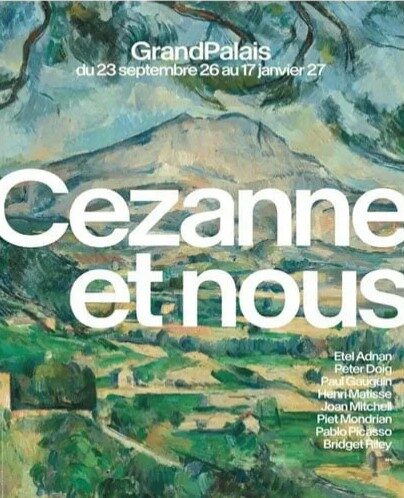
Cézanne et nous — Grand Palais
September 23, 2026 – January 17, 2027
The Grand Palais is devoting one of its major fall exhibitions to Paul Cézanne and the extraordinary artistic legacy he left behind with Cézanne et nous.
This is not a traditional Cézanne retrospective. Instead, nearly 180 works—including approximately 70 by Cézanne himself—bring his paintings into conversation with the artists who discovered, absorbed, challenged, and transformed his ideas. The exhibition spans more than a century of art, from Gauguin, Matisse, Picasso, and Mondrian to Joan Mitchell, Bridget Riley, and Peter Doig.
That is what makes this exhibition so interesting to me. Cézanne is often described as a bridge between Impressionism and modern art, but Cézanne et nous asks us to look beyond that familiar description—to see how one artist fundamentally changed the way generations of painters thought about color, form, space, and the relationship between painting and reality.
The exhibition follows Cézanne’s influence from the artists who first discovered his work in the late 19th century through its continuing reinterpretation today.
For anyone interested in the story of how modern art came to be, this is one of the exhibitions I would put at the top of the fall list. Rather than simply looking at Cézanne, you’ll see the artists who looked at Cézanne—and what they did with what they saw.
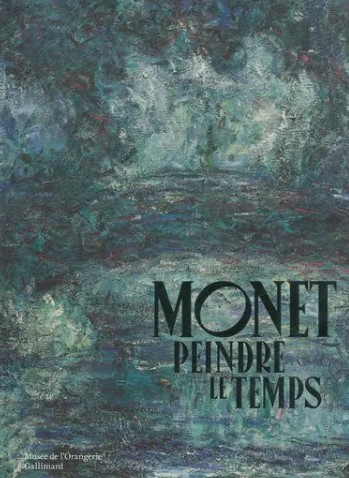
Monet, peindre le temps — Musée de l’Orangerie
September 30, 2026 – January 25, 2027
This year marks the centenary of Claude Monet’s death, and Paris is celebrating one of its most beloved artists with several exhibitions. At the Musée de l’Orangerie, Monet, peindre le temps takes a closer look at one of the central preoccupations of his career: time.
Monet became fascinated with what happened when he painted the same subject again and again, watching it change with the light and the hour. His Meules (Haystacks), Peupliers (Poplars), and Cathédrales de Rouen (Rouen Cathedrals) series are essentially paintings of time—one haystack, one row of trees, one cathedral façade transformed by morning light, afternoon sun, mist, or sunset. The subject remained, but the experience of looking at it was never quite the same.
Over time, these experiments with changing light became something more complex. Monet began to explore not only the fleeting moment, but duration, repetition, and the passage of time itself, culminating in the Nymphéas (Water Lilies).
There could hardly be a more appropriate place for this exhibition than the Orangerie, where Monet’s enormous Nymphéas panels were installed in 1927, just months after his death. Here, his final vision transforms painting from something to look at into an environment that surrounds you.
The exhibition offers an opportunity to see the Nymphéas not simply as beautiful depictions of a garden, but as the culmination of Monet’s lifelong exploration of light, perception, and time.
A little tip: Don’t rush through the Orangerie after seeing the exhibition. Leave time for the permanent Nymphéas rooms. Seeing Monet’s final vision immediately after exploring his lifelong fascination with time makes the experience all the more meaningful.
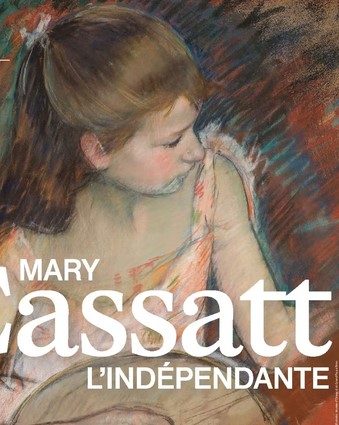
Mary Cassatt: L’indépendante — Musée d’Orsay
October 6, 2026 – January 31, 2027
Mary Cassatt spent nearly six decades in France, became one of the most important American artists associated with the Impressionists, and yet the French national museums have never devoted a major exhibition to her work. That changes this fall at the Musée d’Orsay.
Mary Cassatt: L’indépendante brings together nearly 80 paintings, pastels, and prints, exploring both her artistic development and the independence that defined her life and career.
Cassatt chose Europe and France at a time when women artists faced enormous limitations. She maintained her own studio, paid her models, built her own professional network, and developed a distinctive artistic identity on both sides of the Atlantic.
What makes Cassatt particularly fascinating is that she was both an American and deeply part of the Parisian avant-garde. Her friendship with Edgar Degas brought her into the Impressionist circle, while her own work—particularly her intimate depictions of women, children, and domestic life—gave the movement a perspective distinctly her own.
The timing makes this exhibition especially significant. The centenary of Cassatt’s death offers an opportunity to reconsider an artist who was central to Impressionism but has too often been overshadowed by its better-known male painters. And there is perhaps no better place to do that than the Musée d’Orsay, home to one of the world’s great collections of Impressionist art.
If you’ve ever wondered why Mary Cassatt belongs in the same conversation as the great Impressionists, this is the exhibition to see.
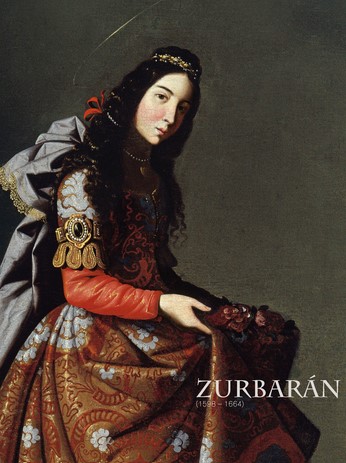
The Louvre: Spanish Golden Age
The Louvre has an especially compelling pairing this fall: two exhibitions opening on the same day that explore different sides of Spain’s extraordinary Golden Age.
Zurbarán
October 7, 2026 – January 25, 2027
Francisco de Zurbarán was one of the great painters of 17th-century Spain, alongside Diego Velázquez and Bartolomé Esteban Murillo. His paintings are known for their intense spirituality, dramatic contrasts of light and shadow, and extraordinary ability to make the textures of cloth, metal, fruit, and other objects feel almost tangible.
Although he is sometimes eclipsed by his better-known contemporaries, Zurbarán developed a style that was unmistakably his own. His figures often have a monumental simplicity, while his restrained compositions and remarkable naturalism give his paintings an extraordinary sense of stillness.
A major Zurbarán exhibition has not been seen in Paris for decades—the last major international exhibition devoted to the artist was held at the Grand Palais in 1988. This makes the Louvre’s exhibition a particularly welcome opportunity to reconsider his place within the Spanish Golden Age.
Sculpting Color
October 7, 2026 – January 25, 2027
Presented alongside Zurbarán, Sculpting Colour brings together masterpieces from the Museo Nacional de Escultura in Valladolid and offers a rare look at 17th-century Spanish polychrome sculpture.
This is not sculpture in the way we might traditionally imagine it. These wooden figures were painstakingly carved and then painted, gilded, and sometimes given glass eyes, real hair, and other details to create an astonishingly lifelike presence. The result can be startling—the boundary between sculpture and living figure seems to disappear.
There is a reason the Louvre has chosen to present these two exhibitions together. Both reveal how Spanish artists used color, light, texture, and extraordinary realism to make religious subjects intensely immediate. Seen side by side, the paintings and sculptures provide a much fuller picture of the visual culture of Spain’s Golden Age.
And Sculpting Colour is particularly noteworthy because it is the first presentation in France of this exceptional group of 17th-century Spanish sculptures from Valladolid.
If Spanish art is not usually at the top of your Paris museum list, this is the fall to make an exception. And because both exhibitions are presented together at the Louvre and run through January, they can easily be part of the same museum visit.
Planning Your Museum Days
A word about tickets: I strongly recommend purchasing your tickets in advance and only from the museum’s official website. Be particularly careful when searching online: fraudulent websites can look remarkably convincing, using the museum’s name, photographs, and branding to appear official. You could end up paying for a ticket that doesn’t exist—or paying far more than the actual ticket price. When in doubt, start from the museum’s own website rather than a search-engine advertisement or an unfamiliar ticketing site.
With so many exhibitions opening within a few weeks of one another, I would also resist the temptation to try to see everything. Paris museums are best enjoyed when you give yourself time to linger.
For an Impressionist-focused day, pair the Musée d’Orsay with the Orangerie. For Renaissance and Old Masters, make a day of the Louvre and Jacquemart-André.
If you’re visiting the Musée d’Orsay this fall, be aware that renovation work is underway in the museum’s public areas. The museum remains open and its collections and exhibitions are accessible, but visitor routes have changed, so check the museum’s website and book online before you go.
The beauty of la rentrée is that there is no need to see it all at once. Choose a few exhibitions that speak to you, leave room for a long lunch or a walk between museums, and let the rest wait for your next visit.
After all, one of the pleasures of Paris is knowing there is always another exhibition waiting for you.

Join the email list and get instant access to My Essential Packing Guide!
It's a curated list of the tried-and-true items I always pack for stress-free, stylish trips, and it’s ready to help you pack for your next adventure!
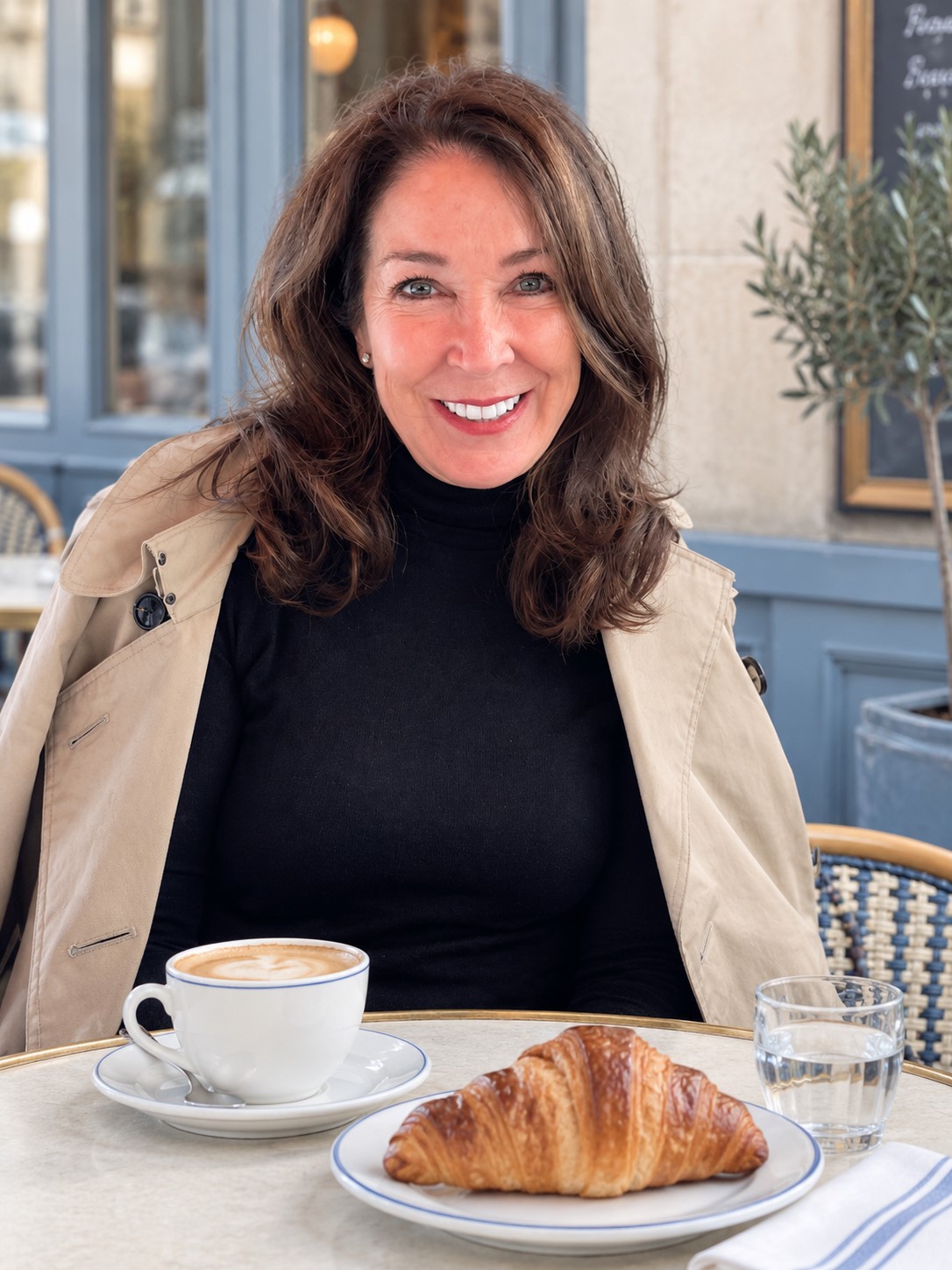

I began my blog in 2008 as a fun and creative outlet to share musings about my time in Paris, the things I love, making the most of your travels, and how to bring everyday France into your everyday life—no matter where you live.
Join The Email List
Sign up to receive blog posts delivered straight to your inbox