
Ah, France – the land of croissants, Eiffel Tower selfies, and… barricades in the streets? If you’ve ever tuned into the news and seen Parisians clashing with police over everything from pension reforms to fuel taxes, you might wonder: why do the French seem to protest so much?
It’s not just a stereotype; it’s a deeply ingrained cultural and historical phenomenon. From the storming of the Bastille to the fiery chaos of recent budget battles, protests – or manifestations as they’re called locally – are as French as a perfectly aged Camembert. Let’s dive into the history behind this tendency and how it continues to shape the nation today.
Waking Up to the May Taxi Protest
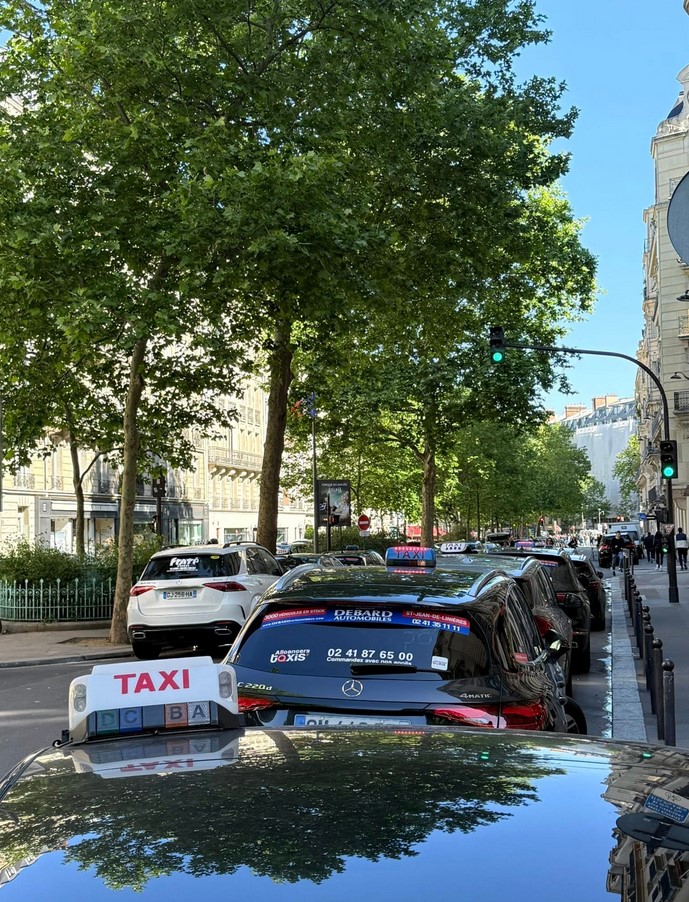
A couple of weeks ago, while staying at the elegant Le Grand Hôtel Cayré on Boulevard Raspail – right in the heart of Saint-Germain-des-Prés – I found myself at the absolute epicenter. I awoke one morning to the relentless sound of honking horns echoing through the streets. Looking out, I saw the boulevard blocked by hundreds of taxis, food trucks, and outdoor furniture. Amid this festive atmosphere, taxi drivers protesting vigorously.
This nationwide strike targeted government cuts to medical transport reimbursements and competition from ride-hailing services, and I was staying in the epicenter of the activity. It caused significant traffic disruptions, including my own ability to navigate through barricades and crowded street on my way to and from the hotel.
Roots in Revolution: A Legacy of Uprising
France’s protest culture didn’t spring up overnight. It traces back centuries, woven into the fabric of the country’s identity through a series of dramatic upheavals that redefined not just France, but the world. The pinnacle, of course, is the French Revolution of 1789. Facing crippling debt, extravagant royal spending (looking at you, Marie Antoinette), and widespread hunger, ordinary citizens rose up, storming the Bastille prison on July 14 – now celebrated as Bastille Day. This wasn’t just a riot; it toppled the monarchy, birthed the Republic, and inspired democratic movements globally. The guillotine became a symbol of the people’s power to hold leaders accountable, even if it got a bit… messy.
But the revolutionary spirit didn’t stop there. The 19th century was a protest playground: the July Revolution of 1830 ousted King Charles X, the 1848 Revolution established the Second Republic, and the Paris Commune of 1871 saw workers briefly seize control of the city, pushing for radical social reforms like women’s rights and press freedom. These weren’t isolated events; they built on earlier patterns, like food riots in the 18th and 19th centuries where desperate crowds demanded affordable bread amid economic hardship.
Fast-forward to the 20th century, and the tradition evolved. The 1936 strikes, commemorating the Paris Commune, drew 600,000 people and forced the government to legalize unions, granting workers rights that still empower labor movements today. Then came May 1968: students and workers united in massive demonstrations against outdated policies, leading to the dissolution of the National Assembly and sweeping social changes. These events cemented protest as a tool for societal transformation, embedding a “revolutionary spirit” in French DNA.
Why the French Can’t Quit Protesting: Politics, Culture, and Power
So, why does this historical baggage translate to frequent street action today? It’s not that the French are inherently more rebellious (though some might argue otherwise). Rather, it’s a mix of structural, cultural, and practical factors.
Politically, France’s Fifth Republic gives the president immense power, often leading to perceptions of authoritarianism – like when Emmanuel Macron bypassed parliament for pension reforms. In such a system, protests become one of the few effective checks on executive overreach. Strong unions, born from those 1936 victories, amplify this: strikes aren’t just symbolic; they’re a tradition with real leverage.
Culturally, there’s a sense of national pride in dissent. Protests are seen as a democratic duty, a way to voice frustrations over inequality, immigration, or economic woes. Unlike in some countries where demonstrations fizzle out, French ones often succeed: the 2006 labor reforms were scrapped after massive marches, and the 2018 Yellow Vests forced fuel tax concessions and minimum wage hikes. This “high success rate” encourages more action.
Frequency plays a role too. While strikes aren’t more common than in other Western European nations, their visibility and intensity stand out. Social media now amplifies this, turning local gripes into national movements. And let’s not forget the locations: Paris, with its symbolic sites like the Bastille, draws protesters like moths to a flame.
This tradition isn’t just history – it’s alive in everyday disruptions.
Modern Mayhem
My unexpected immersion in the 2025 taxi protests illustrated this tradition vividly: disruptive yet purposeful, reflecting a longstanding mechanism for holding power accountable. In France, protests are not merely disruption—they are a vital expression of civic engagement.
C’est la vie. C’est la France.

Thank you for the history lesson Jeannine
Happy Sunday to you
Thank you !