The Art of French Cider
The cider market is booming in the U.S. So, I reached out to my friend Perrine Collette @perrine.c to learn more about this delicious beverage, its origins, and how its made. Perrine was born in Normandy and grew up drinking this regional favorite. Here’s what I learned.
Origins
While the regions of both Normandy and Brittany claim the origins of cider, it seems cider or apple wine has existed since the 5th century and was made everywhere that apples were grown. By the 9th century, the Basques, in southwestern France, were the biggest producers of cider.
At that time, cider was not popular and was consumed mostly by the poor. Later, the quality improved, the flavor was refined, it became more noble, bottled and served in grand homes.
Types of Cider
As with wine, there are many types of cider, including Brut, Rosé, Doux and Demi-Sec. Each has a unique and different tastes and some have higher alcohol content than others.
Raw or Gross
Raw cider is dry, even very dry, and is more concentrated in alcohol, approximately 5 percent. Not very sweet, it has a bitter side. It is generally served with with poultry, beef, rabbit, foie gras, fish, and seafood or with a chocolate dessert.
Sweet
It is the lightest and has fruity notes. The alcohol content is less than 3 percent. It can be enjoyed with something sweet or savory foods, such as a dessert, pastry, or salad.
Demi-sec
The demi-sec is situated between the brut cider and the sweet cider. It is a little sweet, with an alcohol content between 4 and 5 percent. It is particularly appreciated with soft cheese, poultry, sweet or savory dishes and desserts.
Traditional
It is a cider that has not been filtered or only slightly filtered, so its color is cloudy. It can be enjoyed with cold meats, red meats, game, and cheeses with character such as Camembert.
Blocked or Bouché
Cidre bouché benefits from a reputation of quality cider. It is easy to spot thanks to its bottling because, as for champagne, corked cider benefits from this cork which allows a good closing of the bottle.
Rosé
Rosé cider is made from apples with red flesh, which gives it a natural pink colou. It is full-bodied and slightly acidic in the mouth. It is generally served as an aperitif or with white meat or fruit desserts.
Farm
This name designates a cider that has been made entirely on the farm, using only apples grown by the producer.
Pear or Poiré
Poiré cider, as its name indicates, is made using the same production process, the only difference being that it is made from pear juice rather than apple juice. It has a low alcohol content, often between 2.50 and 3°. It is a very refreshing drink.
The Production of Cider
Cider making is a complex six-step process. It requires a good knowledge of the different varieties of apples and depends a lot on the weather conditions. From the harvesting of the apples to the labeling of the bottles, here’s are the steps in the process.
Harvesting
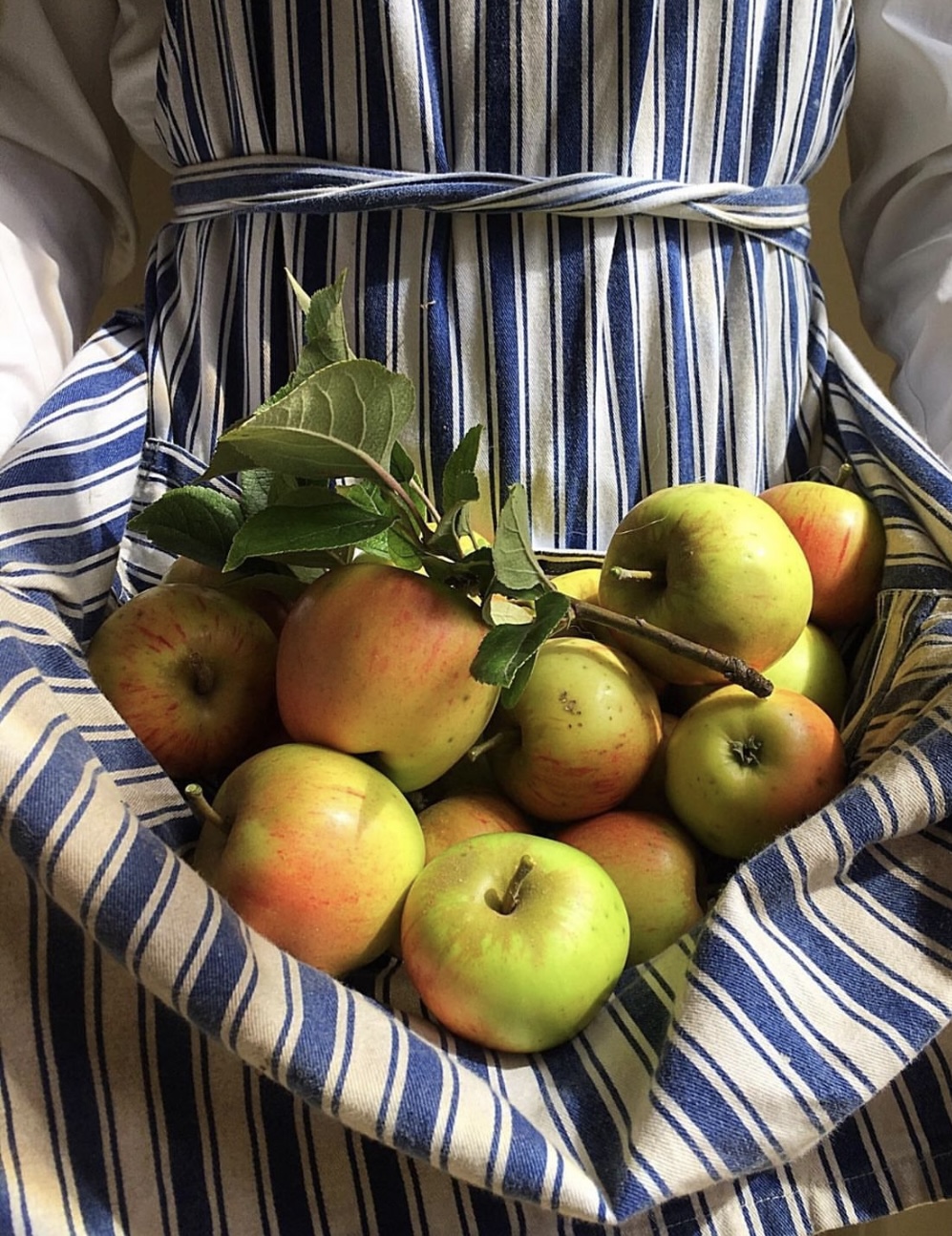
The apple harvest begins around October 15. Contrary to what one might think, apples are not picked from the trees but are picked from the ground. Indeed, when they fall on the ground, it means that they are ripe.
The harvest period is long because different varieties of apples are used to make cider and they do not reach maturity at the same time. In fact, four varieties can be used to make cider:
- Red Binet is a bittersweet apple. It produces every two years (phenomenon of alternation) fruits in abundance, but of small size.
- Clos Renaud is classified as a sweet apple. This apple tree is delicate and susceptible to disease. It also experiences a phenomenon of alternation.
- Petit Jaune is an acidic apples. This apple tree develops fruits of small caliber, every two years.
- Marie Ménard is bitter. Its resistant to disease and the large apples are harvested every year. They are essential in the manufacture of the pommel (aperitif based on cider and apple juice) because they give body to the product.
The apples are then stored by variety and protected from the weather to prevent rotting, until they are all blended, crushed, and pressed.
Grinding
After the harvest, the apples are cleaned and sorted: the best ones are selected. They are crushed to obtain what is called the “pulp.” This step must be done as soon as possible after the harvest to ensure freshness. The pulp comprises two parts – le must or liquid part and the pomace or solid part. For some producers, the pulp is macerated for about an hour to bring out all the aromas of the apples and increase the quality of the juice. The pomace is used to feed livestock.
Pressing
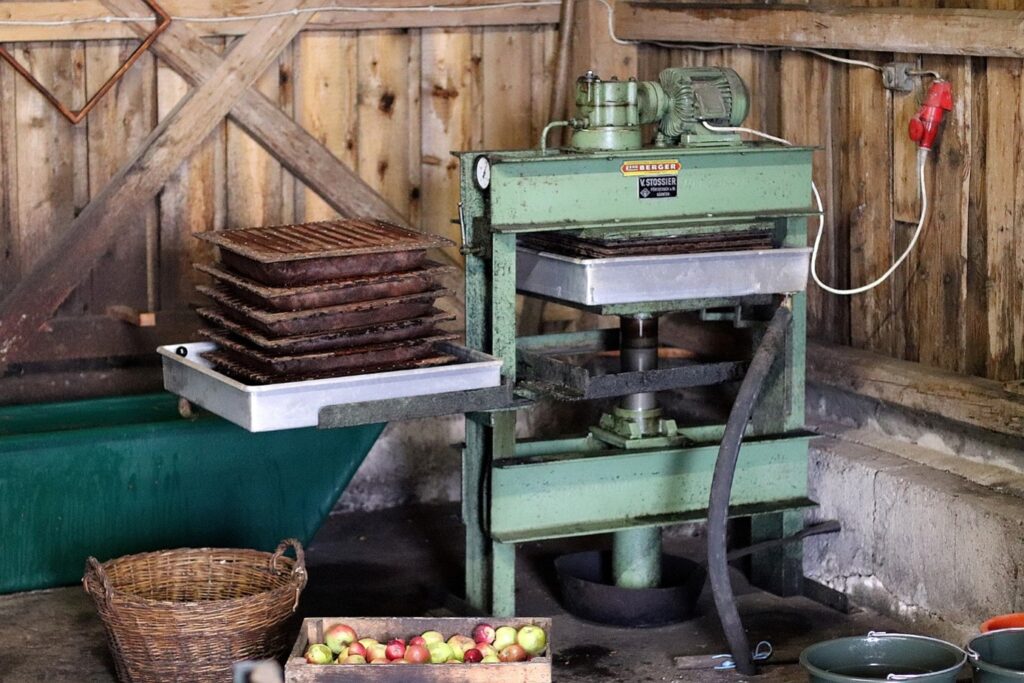
During the pressing, the pulp is crushed with a press to extract the juice and separate the must from the pomace. It is at this point, it’s possible to predict a good cider by the color of the apple juice, the darker the juice the sweeter – promising a good cider.
Clarifying and Fermenting
After pressing, the juice is sent to a vat where it will remain for 3 to 6 days. Fermentation begins and, at the top of the vat, the so-called “brown cap” forms, due to the coagulation of the apple pectin. The formation of this cap will also allow to remove the impurities from the juice. Indeed, under this cap, the apple juice is perfectly clear.
Nevertheless, this stage is delicate because it is necessary to avoid the cap collapsing, which would make it impossible to use the juice, and it is necessary that the quality of the apples is high because without this it may be difficult or impossible for the cap to form.
After the cap is formed, the juice is extracted and put into fermentation, which lasts between 2 and 4 months depending on the year, the temperature, the nature… etc. During this stage, the sugars are transformed into alcohol.
Blending
Cider is not only the result of fermentation after which it is bottled. No, cider is a blend of the fermentation of different apple juices according to their characteristics (sweet, sweet, bitter…etc).
Filtering and Bottling
The cider is then filtered before being bottled. Depending on the producer, the cider is carbonated either artificially or naturally. Natural carbonation is considered the most authentic method and requires an additional3 to 4 months of fermentation after bottling.
Other cider-based spirits
Cider is also used to make other alcohols from Normandy: pommeau, calvados and also cider vinegar. Pommeau is made by mixing the juices used to make cider and calvados. Calvados is essendtially apple brandy and is produced by distilling cider and aging it. Cider vinegar is the result of a much longer fermentation of cider until the alcohol is transformed into acetic acid.
Next time you have a chance, bring a taste of Normandy to your table with a delicious glass of cider. Cheers to you!

Join the email list and get instant access to My Essential Packing Guide!
It's a curated list of the tried-and-true items I always pack for stress-free, stylish trips, and it’s ready to help you pack for your next adventure!


I began my blog in 2008 as a fun and creative outlet to share musings about my time in Paris, the things I love, making the most of your travels, and how to bring everyday France into your everyday life—no matter where you live.
Join The Email List
Sign up to receive blog posts delivered straight to your inbox