
A Visit to the Château de Bagatelle
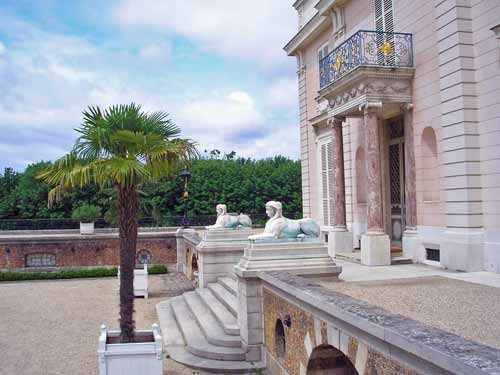
During the annual Fêtes des Jardins, when parks and gardens across Paris open their gates for concerts, guided tours, and special events, I returned to one of my favorite hidden corners of the city: the Le Parc and Château de Bagatelle. On my first visit, the château itself was closed, so I was delighted to finally step inside this extraordinary little jewel tucked away in the Bois de Boulogne.
The story behind Bagatelle is every bit as fascinating as the château itself. In 1775, the Comte d’Artois—the future King Charles X—accepted a wager from his sister-in-law, Queen Marie Antoinette, that he could not build an elegant country retreat in less than three months. He won the bet. Remarkably, the château was completed in just 64 days, employing hundreds of workers who labored day and night to create what was intended as nothing more than a bagatelle—a “trifle” or “little extravagance.” More than two centuries later, that whimsical wager has given Paris one of its most enchanting estates.
Like the Petit Trianon at Versailles, the Château de Bagatelle is a masterpiece of French Neoclassical architecture. Both residences remind me of exquisite music boxes—perfectly proportioned, feminine, and filled with elegant treasures. The interiors have been beautifully preserved, showcasing fine eighteenth- and nineteenth-century furniture, Sèvres porcelain, delicate drawings, and decorative objects. Soft shades of celadon, pale blue, blush pink, and dove gray create an atmosphere of understated refinement, reflecting the graceful transition from the exuberance of the Rococo period to the symmetry and restraint of Neoclassicism.
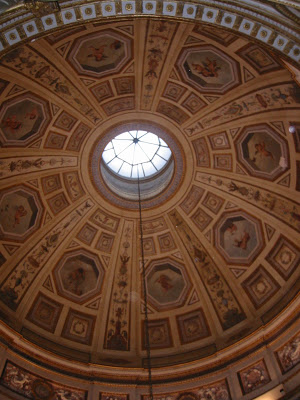
One of the château’s greatest surprises is its magnificent trompe-l’œil decoration. In the music room, celebrated artist Hubert Robert transformed the ceiling into an illusion of open sky, complete with drifting clouds and playful cherubs. The painted coffered ceiling fills the room with light and creates the impression that the walls dissolve into the heavens above.
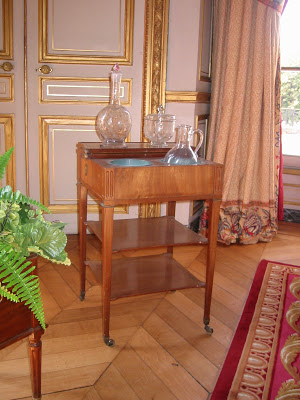
The dining room is equally captivating. The table is set with elegant Sèvres porcelain, nineteenth-century crystal, and gleaming silver candelabra, offering visitors a glimpse into aristocratic entertaining. In one corner stands a handsome walnut rafraîchissoir, a wine-cooling table used to keep bottles chilled throughout an elaborate meal—a practical luxury that perfectly illustrates the French art of gracious living.
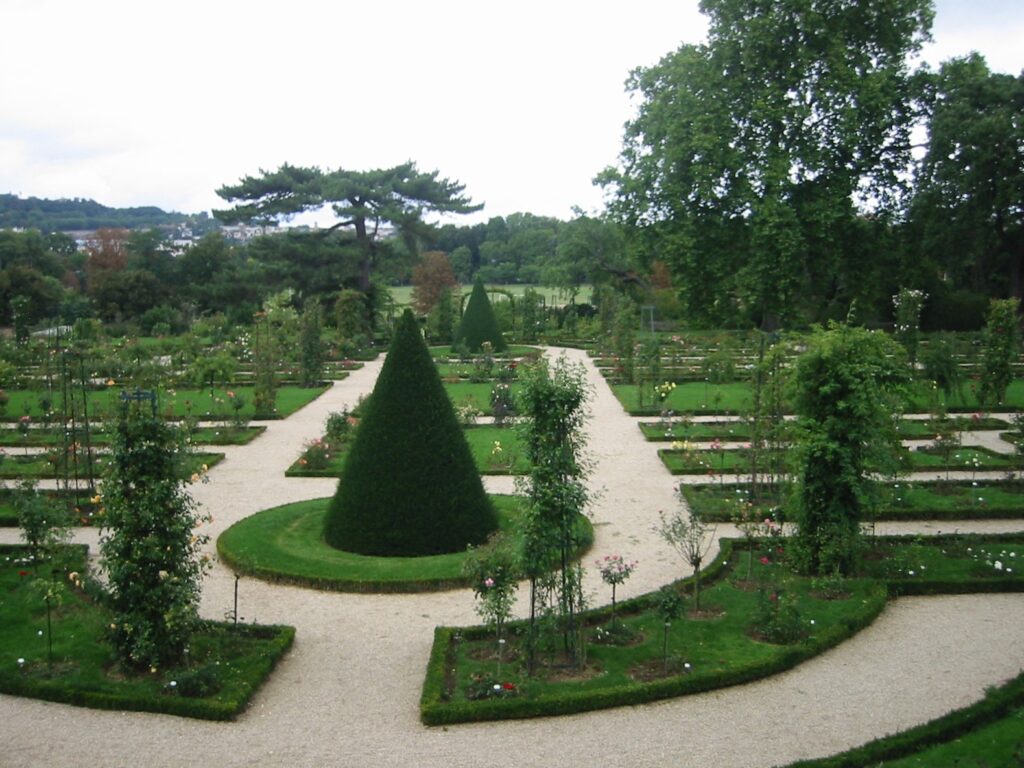
Of course, no visit to Bagatelle would be complete without wandering its celebrated gardens. The estate is home to one of Europe’s finest rose gardens, “la roseraie”, with thousands of rose varieties blooming each year and serving as the setting for the prestigious International New Rose Competition. Unfortunately, my visit came a bit too late in the season to see the rosarie at its peak, but even without the roses in full bloom, the gardens were peaceful, beautifully maintained, and well worth exploring.
The Château de Bagatelle remains one of Paris’s most delightful hidden treasures—a place where history, architecture, art, and gardens come together in perfect harmony. Whether you are drawn by the remarkable story of its construction, its beautifully preserved interiors, or its world-renowned rose garden, it is a destination that deserves a place on every Francophile’s Paris itinerary.

Join the email list and get instant access to My Essential Packing Guide!
It's a curated list of the tried-and-true items I always pack for stress-free, stylish trips, and it’s ready to help you pack for your next adventure!
1 Comment
Leave a Comment

I began my blog in 2008 as a fun and creative outlet to share musings about my time in Paris, the things I love, making the most of your travels, and how to bring everyday France into your everyday life—no matter where you live.
Join The Email List
Sign up to receive blog posts delivered straight to your inbox


simply stopping by to say hey