The Blogging Comeback? Eighteen Years Later, I’m Still Here.
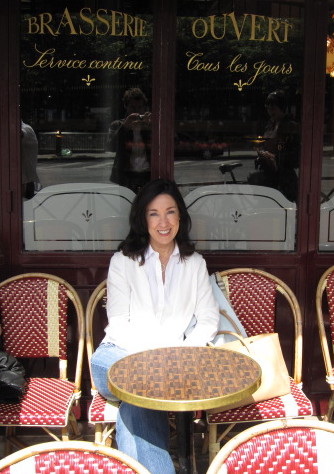
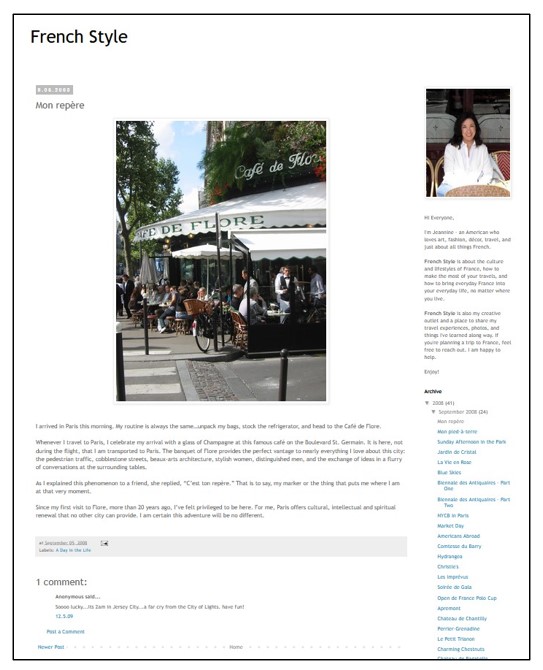
When I started writing about France in 2008, I wasn’t thinking about building a brand, growing an audience, or creating a business. I simply wanted to share my love of France.
I loved discovering little cafés and beautiful shops, wandering through Paris neighborhoods, learning about French traditions and, most of all, I loved to write. I wanted to share my understanding of the rhythm of life in France—the everyday rituals and lifestyle choices that allow us to slow down and make time for ourselves.
I’d actually been sharing my Paris recommendations long before I had a blog. I kept a Word document listing restaurants, shops, museums, neighborhoods, markets, and little discoveries to share with family and friends planning trips to Paris. That document became the foundation for my early content. Looking back, it was the beginning of what I still do today: sharing the France I know and love.
At the time, blogging felt very personal—almost like an online journal that you could invite other people to read.
Eighteen years later, I’m still writing. Which is why a recent Instagram post caught my attention. It proclaimed that blogging is coming back in a big way. My first reaction was: Coming back? Did it ever leave us? After all, I’ve been here for nearly twenty years.
So I started looking into the evolution of blogging. The story is actually quite fascinating.
The Rise of the Blog
Blogging began in the mid-1990s and became increasingly popular in the early 2000s. When I started my blog in 2008, blogs were everywhere—and still relatively new.
That year, Pew Research reported that 33 percent of internet users read blogs, equivalent to 24 percent of all U.S. adults. Twelve percent created or worked on their own blog.
The blogging community was growing, too. I attended a BlogHer conference in Chicago in 2009, and I was struck by how quickly blogging was becoming a business.
There were session after session about monetization—working with brands, advertising, partnerships, and turning a blog into a career. I met so many women who had left their careers to blog full time. What had started as a creative outlet or online journal was becoming a legitimate profession.
And then, in 2009, Julie & Julia brought blogging into popular culture in a way that felt very personal to me.
I identified with Julia—not because I was a cook, of course, but because of the way she approached her creative life. She was a career woman by day and pursuing something she loved on the side. She wasn’t initially doing it to build a business or become famous. She was doing it for herself, because she loved it.
That was exactly how blogging felt to me.
I was building my career during the day and writing my blog at night. I wasn’t thinking about followers, algorithms, sponsorships, or where it might lead. I simply had something I loved doing, and I wanted to share it.
I had previously worked as a freelance writer for a lifestyle magazine, taking assignments from an editor and writing to their specifications. Now, I didn’t have to wait for an assignment. I didn’t have to pitch a story or get an editor’s approval. I could simply publish what I wanted.
For me, that was the magic of it. I could write about France and, somehow, someone I’d never met could read it.
Then Social Media Changed Everything
It didn’t take long for the internet to evolve.
Facebook launched in 2004. Twitter followed in 2006. Pinterest and Instagram arrived in 2010. Each offered a new way to share ideas, photographs, recommendations, and snippets of everyday life. Instead of writing an entire post, we could share a thought in a status update or tweet. Instagram turned photographs into a form of communication in their own right.
And the shift was significant.
By 2009, Pew was already documenting a decline in blogging among younger people. Blogging among teenagers had fallen from 28 percent in 2006 to 14 percent in 2009, while blogging among 18-to-29-year-olds fell from 24 percent in 2007 to 15 percent.
Pew’s explanation was remarkably prescient: many of the things people had once done on blogs were moving onto social networking sites.
Blogging wasn’t necessarily disappearing. It was being absorbed into social media.
The Influencer Years
During the 2010s, blogs didn’t disappear. They evolved into businesses.
Bloggers became influencers. Pinterest became a major source of traffic. Google search became increasingly important. Affiliate marketing grew, and brands began working directly with bloggers.
The formula became:
Blog + Instagram + Pinterest + affiliate links + sponsored content.
And somewhere along the way, another trend emerged: the lifestyle blog became a brand. Names like Pink Peonies, Bright & Beautiful, and Fox & Feather captured the aesthetic of the era. Cute, alliterative names gave bloggers a world of their own—a name that could encompass fashion, beauty, home, travel, shopping, and everyday life.
The blog was no longer simply a place where someone wrote. It was becoming a lifestyle brand.
I saw that evolution firsthand. In 2015, I attended a Create & Cultivate conference in Chicago. By then, the conversation had shifted considerably. Sessions focused on harnessing technology and social media to build a brand, market products, and create communities of followers.
It was a very different world from the one I’d entered in 2008. Blogging was no longer simply about publishing your thoughts online. It had become part of a much larger digital ecosystem—and increasingly, a business strategy.
But it also meant bloggers were becoming dependent on platforms they didn’t control. Google could change its algorithm. Facebook could change its feed. Instagram could change what it prioritized.
Having an audience didn’t necessarily mean your audience would see what you published.
Then Came the Algorithms
I love my blog.
I love creating content and deciding what is worth sharing—not an algorithm, but me. I can write about what interests me, what inspires me, what I’ve discovered, and what I think might be useful or beautiful or simply worth knowing.
I’m sharing what I care about, pursuing my creative interests, and building my career. The blog brings all of those things together—and in many ways, that remains true today. I use Instagram and Pinterest to introduce people to my work and hopefully bring them back to the blog. But I’m not interested in constantly chasing the rules of the latest algorithm.
There is also the question of time.
A thoughtful weekly blog post takes time: photographs, editing, research, writing, and managing the website. Meanwhile, my career has continued to grow. Over the years, I’ve gone from being a mid-level manager to a Vice President, with all of the responsibilities that came with it.
Who has time to chase every new algorithm, every new format, every new rule? I certainly didn’t. And honestly, I didn’t want to. My blog remains something different.
Still there. Still searchable. Still mine. A place where I can write as much as I want, about whatever I want, whenever I want. First on Blogger, then Homestead, then Wix, and now WordPress.
Along Came Substack
When Substack came along, I paid attention.
Not because I thought I needed to move my blog there, but because I recognized the idea immediately. Here was a platform centered around writers, newsletters, and—most importantly—direct relationships with readers. It was built around a concept that felt very familiar to me:
I have something to say. You might want to read it. So I’ll publish it and send it directly to you.
In other words, it was very much the idea behind blogging in the first place. I remember thinking, Well, it looks like blogging has come full circle.
But I didn’t consider moving to Substack. Why would I move my writing to yet another platform when I already had exactly what I needed?
My website was mine. My content was mine. My archive was mine. And after eighteen years of watching blogging platforms, social networks, algorithms, and business models come and go, I wasn’t particularly interested in jumping onto another bandwagon simply because everyone else was doing it.
Substack has certainly grown. In March 2025, it announced that it had reached five million paid subscriptions. But that growth doesn’t change the fundamental reason I never felt the need to move.
I already had my own platform.
Which, in a way, brings me back to where I started.
The platform may change. The technology may change. The terminology may change. But the fundamental idea hasn’t changed at all.
You have something to say. Someone might want to read it. So you publish it.
I’ve been doing just that on my own little platform for eighteen years.
Why the Recent Refresh
What began as a place to share my love of France has become a resource for my followers. People want to know how I spend my time in Paris. Where I go. What I recommend. What I pack. What I buy. How I navigate the city. And increasingly, they want help planning their own experiences.
The recent refresh is a reflection of those interests. To meet their needs, I’ve added a few new ways to make what I know more useful: The Paris Guide, travel planning, and ShopMY.
While there are now resources available to purchase, selling has never been the raison d’être of the blog. The blog is, and always has been, a place to share what I know, what I’ve discovered, and what I love about France—and hopefully inspire someone else along the way.
These additions aren’t things I created simply because I wanted to monetize the blog. They grew organically from the content I’ve already been creating and from the questions people were asking me.
In other words, the business grew out of the content rather than the other way around.
And that’s important to me.
The blog is still a place where I can write about what interests me, share what I’ve discovered, and hopefully inspire someone else. The difference is that after eighteen years, I have a lot more to share—and I’ve found new ways to make that knowledge useful and easily accessible.
Maybe that’s the real reason I never thought blogging went away.
It changed. The internet changed. The way people discover content changed. The business of blogging changed.
But the fundamental idea remains remarkably simple:
You have something to say. Someone might want to read it. So you publish it.
Eighteen years later, that’s still what I’m doing.
And I’m still here.

Join the email list and get instant access to My Essential Packing Guide!
It's a curated list of the tried-and-true items I always pack for stress-free, stylish trips, and it’s ready to help you pack for your next adventure!
2 Comments
Leave a Comment
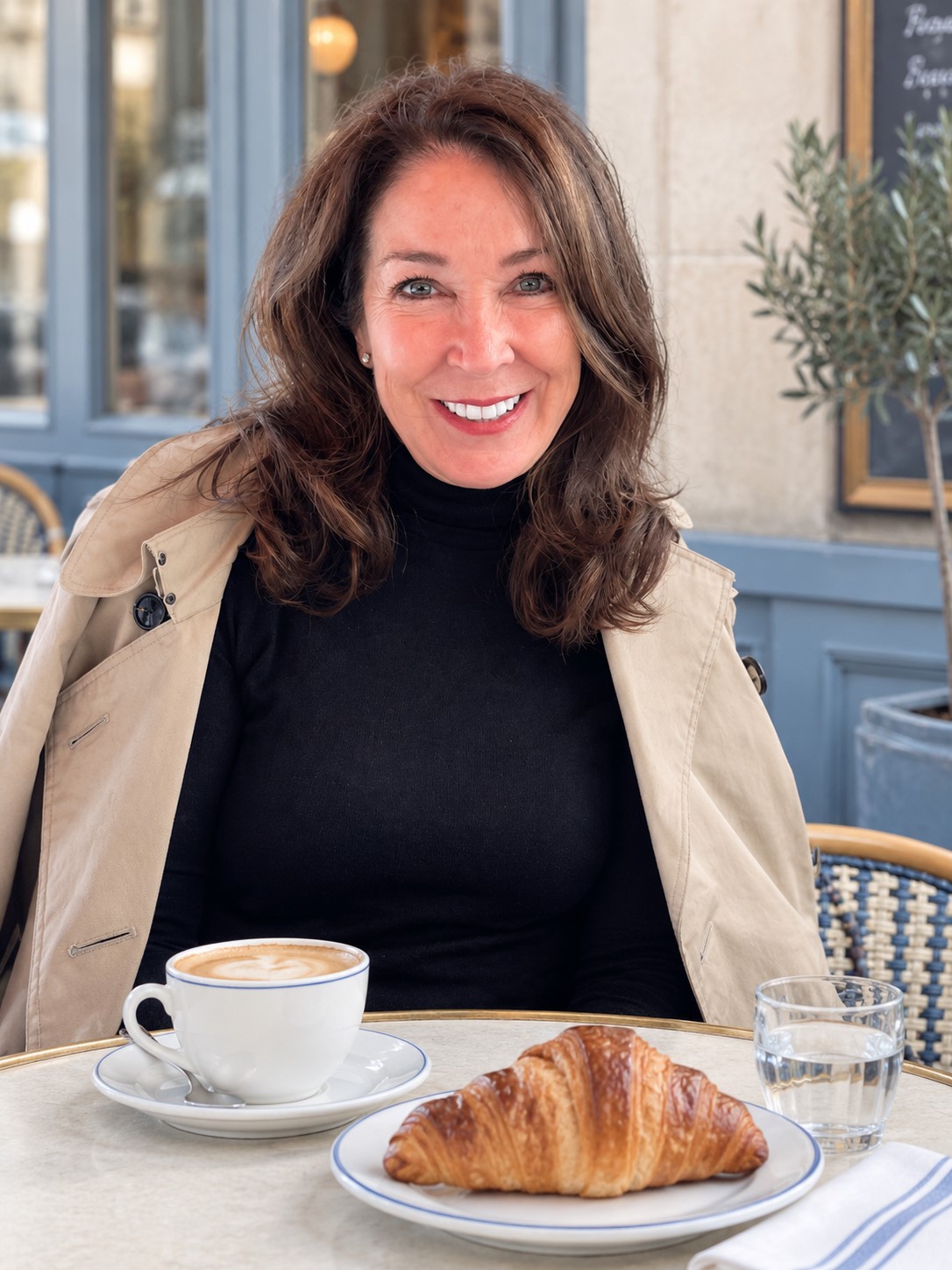
I began my blog in 2008 as a fun and creative outlet to share musings about my time in Paris, the things I love, making the most of your travels, and how to bring everyday France into your everyday life—no matter where you live.
Join The Email List
Sign up to receive blog posts delivered straight to your inbox



I really enjoyed this newsletter. Very best wishes for your new chapter which I look forward to following along.
Thank you, I’m happy to know you enjoy the posts.